Four common FAQs regarding Solar Energy

Four common FAQs regarding Solar Energy

Among food, communication channels, transport, etc., energy has become an essential element or, rather say, a basic human need in today's time. Without it, there is hardly any chore that can be completed in our routine. For instance, energy is required to keep the electric railways running to help people with commuting. It is also necessary for residential and industrial activities, so basically everything. 

Having such importance, it has become crucial to ponder over energy conservation and generation sources to keep its demands fulfilled in the near future. According to a report, worldwide energy consumption is anticipated to grow to 778 Etta Joule by the year 2035, which makes us worry about extensive energy-generating mediums such as solar panels. 

Speaking of, solar energy panels are extremely common in most households across the world, just because they have been pitched as a future need! When you bring up the subject' Solar Panel', several questions arise regarding their installation, usage, and especially maintenance. 

Do Solar Panels Need to Be Maintained Regularly?

A solar panel comprises little photovoltaic sheets which are responsible for transforming sunlight into usable energy. Often these photovoltaic cells are struck by pollen, bird poop, dust, and debris which hamper the lifespan of the solar panel. Therefore, the maintenance of solar panels is of utmost necessity to reinforce its full potential to generate energy. The installation and maintenance of solar panels installed in households are usually catered by solar panels consultants who carry out operative inspections to ensure that these devices are functioning well throughout the year.

Cleaning your solar panel allows the panel cells to absorb more quantum of light and, as more light hits the platform, it leads to more energy generation. Routine maintenance expands the lifespan of the solar panels, so it means you can invest your time in cleaning them on a bimonthly basis and keep on obtaining benefits from them for years to come. Although the required maintenance is relatively moderate, they can be cleaned with a water hose as the water pressure conveniently separates the dirt and makes it stainless. 

How Do You Maintain Solar Panels?

As we have briefly discussed the maintenance of solar panels, which experienced solar power consultants must ideally do, let us explore the ways you can maintain your solar panels in a do-it-yourself manner:

  1. First things first, get the solar panel installed in a way that it acquires optimal sunlight. For instance, if your rooftop gets a lighter shade, you must look for alternative ways to install your solar panel across the walls of the premises adjacently. This way, they work efficiently in drawing the maximum sunlight and lead to effective power generation. 
  2. Keeping track of the daily performance of a solar panel ensures its effective functioning. It provides you with vital metrics regarding average energy production units, their consistency over the weeks, and so on. These crucial values aid your understanding of the solar panel's working, and any inconsistency can further be taken up with the manufacturer for device rectifications. 
  3. Some homeowners also steer clear from cleaning their solar panels themselves. In these cases, portable self-cleaners come in handy because they act like tiny sprinklers that automatically wash the dirt off while you stay busy with your work. 

Is there a Maintenance Difference Between Ground Vs. Roof Panels? 

Often households get bewildered while choosing between a ground solar system or a rooftop panel. It is because they both have different installation approaches, and maybe require a little different maintenance. It depends upon the ease of access to the solar panels that make their maintenance simpler. Since the solar panels installed on your backyard ground are easier to make, you can conveniently clean them with soap water or a photovoltaic sheet cleaner. 

On the other hand, rooftop panels are slightly challenging to reach- you have to take up a ladder or call professionals for the same. Furthermore, not everyone plans on going to the rooftop to clean the solar panels. Thus, cleaning a roof panel might become stringent and complex. 

Can I Monitor the Health of My Solar Panels? 

Along with daily maintenance, monitoring your solar panels' performance and physical condition is vital to avoid any hefty upfront repair costs in the near future. Self-monitoring and evaluating solar panels is relatively easier than people think. Below are a few steps that homeowners can look forward to while monitoring the health of their installed solar panels:

  • Check your inverter - The solar Energy that the photovoltaic cells absorb is further transformed into the power used in our households. The power inverter converts the direct current received from solar panels to alternating current. Thus it is imperative to keep an observing eye on your inverters to ensure that the solar panels work efficiently and as designed. 
  • Manage power generation units via online apps - With the aid of digital transformation, you can now effortlessly analyze the panel system data such as daily power generation units, potential and expected production averages, etc. These numbers are portrayed over online apps downloaded on your smart devices and easily accessed via the internet. It promotes remote controlling and provides crucial insights that encourage homeowners towards responsible power utilization. 
  • Lookout for tangible impediments - Last but not least, physical things such as bird droppings or leaves can build up dry coatings on the solar panel's sheet, causing photovoltaic cells to delaminate. As a result, it is recommended that you clean your solar panels regularly to maximize their production capacity over time.

Why contact us?
 

Speaking of solar power consultants, Emerald Sun Energy is your one-stop shop to cater to all your requirements concerning the purchase, installation, and maintenance of solar panels. We understand the urgency to shift our focus on solar energy, which is why our expert technicians dedicatedly provide seamless services throughout your solar journey with us. Reach out to us today to book your appointment, or call us now to know more!

Solar Panel Installation

Solar Panel Installation: What to Expect

Even as the 17-year price drop of solar panels came to an end in 2021, it's still time to jump on these energy savers before federal tax incentives fall away forever.

All across the country, Americans are turning to rooftop or yard solar panel installation to reduce their electric bills. In some cases, in sunshine states where net metering is enforced, some homeowners are coming away with hefty credits.

Furthermore, solar technology has improved in efficiency and cost over the years. The panels are thinner, lighter, and generate more energy.

So, now that you've decided on a solar panel home installation, you're asking: What can I expect to happen next?

That depends on several factors. With none more important than the solar panel installation companies you're considering and the shape of your roof. In the following article, we'll examine how to install solar panels and what you can expect next.

Buy, Don't Lease

A solar panel installation is likely to increase the value of your home by about 3.5%. The U.S. Department of Energy also found that solar panels added about $15,000 to the value of your home.  But these figures on based on owning the system outright.

If you lease the panels, you may reap some short-term financial gain, but you'll likely have to make accommodations with the solar contractor for the 20- to 30-year term of the lease.

This can include arranging for repairs and removal due to roof issues and ensuring that a technician is available to check that the system is working properly.

In most cases, the solar provider has no problem letting a potential buyer take over your lease. They'll just need to meet the minimum credit requirements. However, anyone buying your home might balk at getting into a contract that could stretch longer than the life of your roof.

Credits Are Important

If it is at all possible, consider finding the estimated $40,000 either in cash or through a home improvement loan to buy the system outright. If you play your cards right, you'll likely only pay $12,000 out of pocket for the installation after tax incentives.

Worst of all, with a lease, you won't enjoy the lowest price of energy available from the panels, and the term of the lease could change, leading to higher costs later on.

Check Your Roof Before Solar Panel Installation

When eyeballing your roof before installing solar panels, try to calculate how much life your roof has left in it. As a rule of thumb, if you replaced your roof within the last 10 years or have 10 years or more of life left in it, go ahead with the solar installation without hesitation.

If you don't know or can't tell how much life is left in your shingles and roof, then consult either a roofer or your prospective solar installer.

This is a serious consideration since a roof replacement can cost close to $10,000 on average.

Then take a look at the shape, slopes, and direction your roof faces. You'll need about 200 square feet for a suitable solar panel system. Also, you'll want to have a moderate pitch so that the panels collect the maximum amount of sun. Ideally, you'd like your home to face south or west to maximize your exposure to the sun.

Lastly, you need to make certain that your roof can handle the additional weight. Again, a certified panel installer can help you determine the proper load-bearing requirements.

What Are Your Power Requirements?

After you've examined the limitations of your roof, if there are any, you should estimate your system requirements.

To do this, you should identify your annual energy usage by looking at your utility bill. Then calculate how many hours of sunlight you can expect where you live. When you have these numbers, compare them to the total output of the system you are looking to purchase.

How Do You Connect to the Grid?

The power that your new photovoltaic cells produce is direct current, or DC power. To turn that power into usable energy for your home, you'll need to convert that power into alternating current or AC.

This conversion used to take place with a standard inverter box, but now most panels come with individual inverters. In many cases, this power is then sent through a battery to store some of the power and then into a meter and back into the power grid.

Expect to have some equipment installed near your meter and fuse box that power can move from the panels to your home and onto the grid.

Get the Correct Approvals

Before you set up your appointment with your panel installer, make sure you are aware of any local ordinances. For example, many subdivisions and condominiums have rules about if and when solar panels can be installed and how many.

A good rule of thumb is that if you are paying HOA fees, you need to check with the association about any solar panel ordinances.

Insist on a Final Inspection

Before the solar panel installer walks off the grounds and on to the next job, ask them for a complete tour of the system and allow them to help you inspect the panels on top of your roof.

Even if you are unfamiliar with the equipment, you'll be able to inspect the wiring and your roof. If you have any concerns, make sure you raise them when the contractor is on the job site.

Solar Panel Maintenance

Now that the panels are up, make sure you know how to maintain them properly. This will help the panels retain their value and help you get the most out of their energy-producing capability.

In general, you should clean your panels twice a year. To do this, spray them down with clean water and give them a gentle brushing with a light solution of soap and water. When you feel you've removed any dirt and build-up, rinse them off with more clean water.

Watch the Meter Spin Backward

Now that your solar panel installation is finished, you can enjoy the power of the sun and watch that credit from the power company grow.

In many parts of the country, you can save anywhere from $400 to $3,500 yearly, depending on the number of sunny days you receive and the price of your current energy bills.

Are you ready to go solar? Contact us today to talk to start your estimate.

what-is-solar-inverter

What Is a Solar Inverter and You Do You Need?

If you're considering solar power, you might find yourself asking yourself "what is a solar inverter?". Well, you're in the right place to find the answer.

In essence, a solar inverter is a device that helps alter your electricity current for mainstream use. But that's not all it does. 

In this article, we will cover everything you need to know about solar inverters. So that you can decide if you would like for your own solar system.

Whenever you're ready to acquaint yourself with the power of a solar inverter, keep reading.

What Is Solar Inverter?

A solar inverter is defined as a type of electrical device that modulates the dysregulated direct current output of a solar panel into alternating current. This type of currency can be subject to use for various applications, such as an off-grid network for electricity.

In PV systems, a solar inverter is a balance of a system that allows the use of normal alternating current devices. These inverters very variable functions, starting with the prevention of anti-islanding and power point tracking.

If you're using a solar system as part of your home, the installation and selection of the device are very important. The principle by which a solar panel inverter works was already mentioned. 

The power generated will range anywhere from 240V to 600V. This conversion is done via insulated gate bipolar transistors in most cases. When the solid-state entry of these devices is in H-bridge form, it oscillates the current from DC to AC.

A step-up transformer is usually used so that AC power feeds to the grid after the acquisition. A few entities have started to employ inverters without a transformer, which can prove to be more efficient when compared against transformer-equipped inverters.

In all solar edge inverters, a programmable microcontroller is used to push various function algorithms with precise predictability. The controller improves the output power from teh panel via maximum power point tracking.

A step-up transformer is employed so that the AC power can be subject to acquisition and feeding to the grid. A few designers have started designing inverters without a transformer which has high efficiency as compared with the inverters which have a transformer.

Now that you know what is a solar inverter, let's examine the various existing types of technologies used in them.

The Solar Inverter Types

Solar inverters fit into classifications of various kinds. There's no preset standardized type of solar inverter that is a one-size-fits-all solution to all solar setups.

String Inverter

A string inverter is subject to form as a string, where many other strings are jointed to a single inverter. Each string has DC power and modulates into AC power.

Based on the size of the setup, you might have several string inverters with each string getting DC from other strings. These inverters are great for setups in which panels are installed on the same plane facing the same direction.

String inverters are also used with power optimizers, as well as each solar panel. Manufacturers of panels use these technologies and sell them as a single solution, known as a smart module. 

Power optimizers are beneficial just like microinverters, but they don't cost as much. 

Central Inverters

Central inverters are relevant to string inverters, but they are larger and support a greater number of strings. Rather than having the string open, the strings are joined in a single box so the DC power runs into the inverter where it is transformed.

The inverters needles of the component connections will need a combiner box and pad that is suitable for large installations on production arrays. The range of central inverters goes from MWs to many KWs. They can handle up to 500kW in the area.

These inverters are not used for homes, but they are more common in utility-scale solar farms and commercial projects.

Microinverters

Microinverters are great for residential and commercial projects alike. Just like power optimizers, these are module-level technologies. Hence, each inverter is installed on each panel.

Microinverters transmute DC to AC at the panel, so there is no need for a string inverter. Due to panel-level conversion, if the panel performance is shaded, the residual panels are not exposed.

The inverters will monitor the single panel function. This is unlike a string inverter in which the act of each string is necessary for good panel installation. By using microinverters, lots of benefits come from solar optimization. 

Battery Inverters

Battery inverters are getting quite common now. These have a battery charger and inverter, they are unidirectional. The operation of these inverters is subject to assistance with a battery. 

The inverters are grid-interactive, grid-tied, and off-grid. The primary benefit of such inverters is that they give a continual function for critical power loads of the grid. 

In all cases, the inverters handle the power between the array and grid while simultaneously charging the batteries. They also monitor the battery status and regulate how the battery charges.

Hybrid Inverter

The hybrid inverter is a multi-mode inverter, it allows the use of batteries as part of the solar power system. It provides an interface for the battery via DC coupling. 

Electronics in this inverter manage the discharge and charge of the battery.

Pros & Cons Of A Solar Inverter

There are many benefits to having a solar inverter as part of your solar power system. Some people would beg to say it's an essential part of any solar system. But there are also some drawbacks to using a solar inverter.

Advantages

With the use of a solar inverter, the energy depletes the greenhouse effect. With solar products, you also save money on utility bills. 

The solar inverter helps your solar system be reliable for electronic use via DC to AC transmutation. The inverters are great for businesses that want to reduce their energy needs. 

Inverters are multifunctional with many functions for large energy consumers who want to optimize costs. Inverters are easily maintained and they work very well with regular maintenance.

Disadvantages of Solar Inverter
The primary disadvantage to using a solar inverter is that it can be expensive for many people. Sunlight is a necessary part of electricity efficiency, without it the inverters are useless.

Inverters often require lots of free space for safe installation. Some inverters also require a battery for night-time functionality, which can be problematic for some people.

Solar Solutions for You

Now that you know what is a solar inverter, you are that much closer to deciding if you would like to have one as part of your system. However, some of you might not even have a solar setup yet. 

If that's the case and you're interested in installing solar for your business or home, get in touch with us and we will happily accommodate your needs.

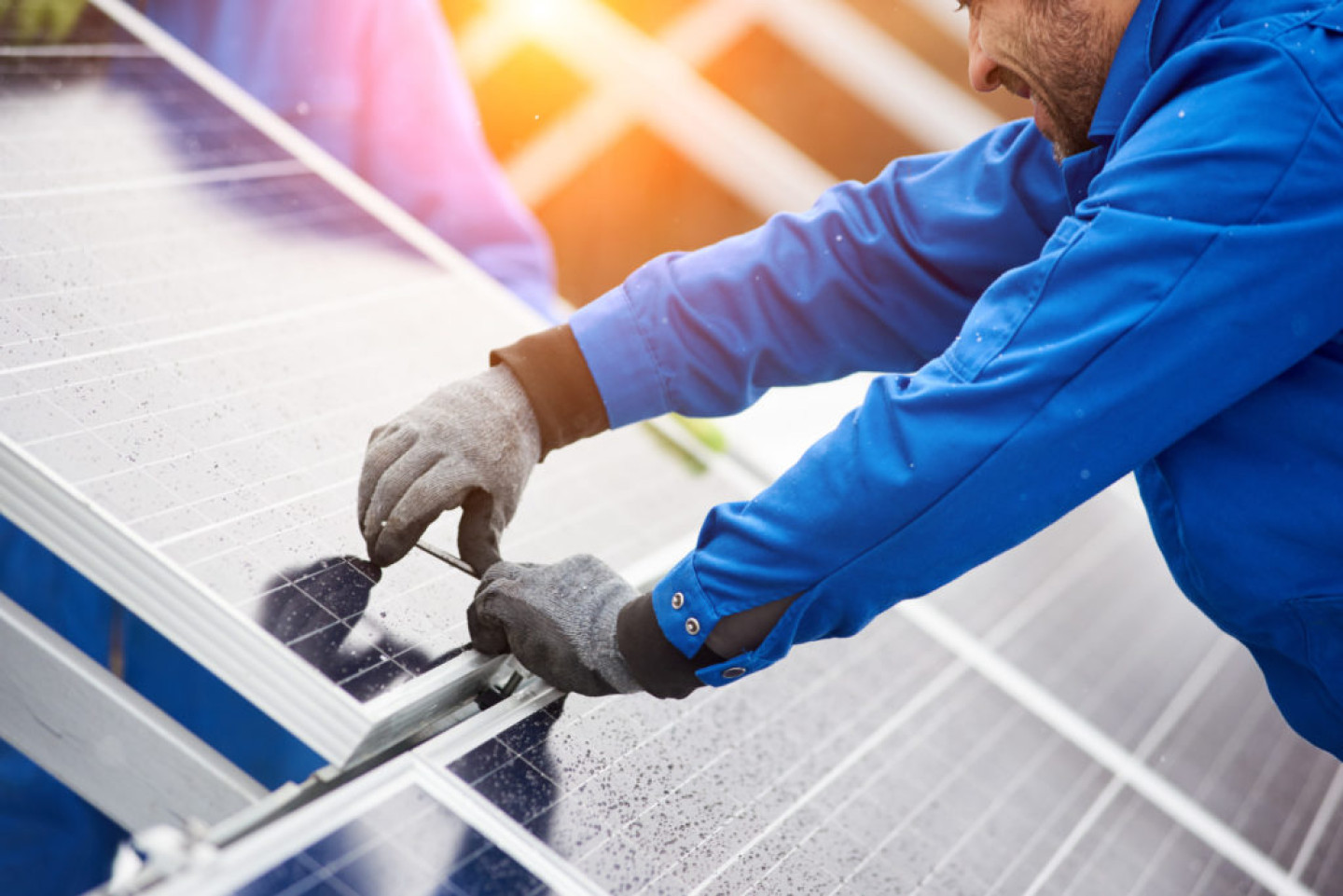
Smiling male technician in blue suit installing photovoltaic blue solar modules with screw. Man electrician panel sun sustainable resources renewable energy source alternative innovation

8 Questions You Should Ask Your Solar Company

Thinking of going solar? If so, you’ll want to make sure that your solar company of choice understands your priorities.

See, a lot of solar sales teams cover the same ground during their pitch. They’ll tell you how solar panels work, why they save you money, and how renewable energy is great. What they often neglect to mention is whether solar is right for you at all.

Yes, solar can save you money. However, can your solar provider guarantee to install your system the right way? If they can’t, there’s a chance you’ll have to replace the entire system if it breaks. Most reputable companies won’t try to fix another company’s mistakes.

Not sure what to ask your solar provider? These eight simple questions will help you find the right crew for the job.

1. Why Do You Charge Less Than Your Competitors?

While you’re researching solar companies, you’re bound to see some lower bids. This can be an indicator of a good deal, but it can also be a red flag.

The truth is, there are plenty of factors that influence the cost. Maybe it’s the products they’re using. Maybe they don’t offer a warranty. Maybe their price comes down to their low overhead and company size.

If you notice a deal that seems too good to be true, there’s almost always a reason for it. When it comes to solar, you tend to get what you pay for. The price tag alone will never tell you the entire story—do your due diligence and research further.

2. Do You Offer a Warranty?

Solar is a big enough purchase that you want to be sure you’re making the right choice. If you’re buying a high-quality product, it should come with a warranty. The company should be confident enough to back up its craftsmanship as well.

This is another area where it’s important to look into specifics. For example, you should ask the solar company what is and isn’t covered by their warranty. You should also inquire about the process for repairs done outside of the warranty.

3. Do You Use Google Earth for Sizing Your Systems?

Google Earth is a helpful tool, but it can be out of date. For instance, it may not capture the recent renovations you’ve done on your home. If there are any trees around the house, they may have grown a lot within the last five years.

If the solar company relies on Google Earth to size the systems, their quote might be inaccurate. This can lead to design or price changes down the line. The best way to receive an accurate quote is to work with real measurements of your property.

4. Do You Subcontract?

If a solar provider doesn’t subcontract, their installer team will have better collaboration with the sales team. Plus, your salesperson is more likely to know how the installation process works. This allows them to see issues with the design before they come up.

The above benefits translate into a more seamless experience for the customer. You don’t get that with a subcontracted crew. If a company subcontracts work, they won’t control its safety, quality, and insurance.

5. Are You and Your Employees Insured?

If the answer is no, you should start looking elsewhere. When it comes to construction, insurance and workers’ compensation is essential.

In these situations, it’s important to consider the worst-case scenario. Let’s say an installer slips off your roof and gets gravely injured. If the company has insurance, the worker’s family will go straight after them.

If the company isn’t insured, this kind of incident could make them go under. This stops you from taking advantage of any kind of workmanship warranty you might have had. What’s more, the worker’s family could now press charges against you.

6. Can You Provide References?

Testimonials remain the best way to gain insight into a company. The more reviews a company provides, the better their brand loyalty looks.

Of course, you should always do your own research. One thing to pay attention to is how similar the reviews look. If everyone says that the company was professional, you should be more inclined to trust them.

The number of ratings and reviews matters as well. Two 5-star reviews are nice, but 30 4-star reviews are a more reliable indicator of quality. Look for reviews from recent customers—if all the reviews are old, the company may not be on top of its game anymore.

7. How Often Do You Run Into Issues After Installation?

Every experienced solar provider has encountered problems of some kind. The important thing is how they deal with them. Find out how they handle service calls, what kind of problems they run into, and how do they go about fixing them.

If you get the sense that they keep replacing faulty panels or patching up leaky roofs, dig further. Is this an industry-wide problem? What are they doing to avoid these issues in the future? If you get several quotes, compare their answers to these questions.

8. Who Is Your Lending Partner?

No, a solar company can’t set the terms of your loan. That said, what they can do is pick a lending partner that has your best interests at heart. Every solar company with enough experience can recognize a good deal.

This is why you should ask your solar provider how they picked one lender over another. They should be able to make their case by pointing out certain pitfalls or tricky terms most loans come with. If they can’t do that, you may want to look into other options.

More on Choosing a Solar Company

Going solar should be a wonderful experience, not a headache. By asking these questions, you can all but ensure that the process goes smoothly.

One final tip: look into the company’s install crew turnover. As a rule of thumb, low turnover translates to more experience. This is a good way to guarantee better workmanship and fewer issues in the future.

Interested in learning more about the many benefits of solar energy? Looking for a solar company that can efficiently meet your solar needs? Contact us today—we’ll get back to you as soon as possible!

How to get the best deal on Solar Financing

These Tips will Make your Solar Experience Even more profitable

Understanding your Solar Financing Options:

Understanding you solar financing options is usually one of the biggest indices that will give you the biggest return on investment.

A beautiful thing going on in the Solar Industry right now is that you can get solar for – No Money Down & No Money Out of Pocket!  It is true but it often creates confusion in the buyer’s mind so it is important to understand it.  The confusion is that sometimes people believe that the solar energy system is free, it is not.  What is being implied in the above statement is that you will be able to use the money you are already spending to fund the purchase because the financing options do not require any money down.  So the money you will save on your power bill will be more than the money you will have to pay to finance the system.  I go into much more details in my article “Can I really get Solar for $0 Down and $0 out of pocket”.

The next thing to understand when it comes to your solar financing is what your monthly payments will be vs the duration of the loan.  What this means the more your monthly payment for the solar panel system will be the shorter the duration that you will have to pay on the loan.  In most cases you can have a monthly payment lower than the amount of money that you will save on your power bill with a 12 financing option or 144 payments.  Since your solar panel system hence a performance guarantee of 25 years you will be getting 13 years of energy offset on your power bill which will accumulate to huge savings.  That does not factor in the savings you will receive from being insulated from the power companies rate increases which averages 4% per year.  That means you will make an additional 4% compounded every year even while you are paying for the system.

You can save money immediately if you choose a 20 year payment plan instead.  In this option you will save anywhere from $40 – $80 per month depending on the size of the Solar Panel System you install.  You would still see an increased saving of 4% a year as well while making money from day 1.  If it is $50 per month that is a cash savings of $600 in year one and in year 2 that would jump to $624.  However, you will have to make payments for an additional 8 years but the payments will represent a larger portion of your power bill.  The additional 8 years will cost you more in interest because of the additional 96 payments and most of the 20 year options are also at a slightly higher interest rate.

It really comes down to what your main financial goal in regards to going solar.  If you are looking for the most return on investment then the 12 year option will give you that because you will be making higher payments (still less than you pay the power company) with a lower interest rate hence lowering your overall actual cost of the system when compared to the 20 year option.  The 20 year option often makes sense for people who are on a fixed income and want to lower their overall monthly expenses.  So you make less overall but you make more now.

There are many great financing options available today to purchase a solar power system for your home.  There are some sub-prime rates available, what that means is if prime is 5%(like it is now) and we are able to offer you a rate of 2.99 then that would be a subprime rate.  Our current 12 year option available is at a 2.99 subprime rate.  It is great but it does come with a 17% financing charge that is added to the initial cost of the solar panel system.  At first look you would say NO WAY!  However it winds up being the cheapest solution in the long run and will generate the greatest return on investment other than paying for the system in cash.  We have a 20 year available with no financing charges at a 6.95%.  So you do not pay more for the system but you will pay a 6.95% interest rate for 20 years.

Now we need to understand what the true cost of the solar panel system is vs the retail cost of the system.  The retail cost of the system would be the price of the system with any added in financing charges.  The true cost of the system is what you will actually pay for the system.  To figure that out you will take your monthly payment at multiply it by the number of payments required to fulfil the loan.  If we look at an example of a 12 year 2.99% system that generates $225 a month of electricity.  Your monthly payment would start at $220 per month and when you multiply it by 144 (12 years) your true system cost is $31,680.  Keep in mind that this option also included the 17% financing charge.  Let’s take a look at the 20 year 6.95% (with NO Financing Charges added in) system that generates $225 a month of electricity.  Your monthly payments would be $168 per month and when you multiply it by 240 (20 years) your true system cost is $40,320.  So the system that had 17% added to the cost saved the customer a total of $8,640.  What that means is the subprime rate is a more important variable then the cost of the system.  That is an additional $8,640 you can calculate into your return on investment.

You are also able to secure your own financing through a home equity loan.  The benefit of that is you can write off the interest that you pay on the loan.  You might have a hard time getting a subprime rate but you may be able to get prime (5% in the above example).  That combination may save you similar about of money as the subprime rate.

Checking to see if PACE is available in your area may be another option to consider.  PACE (property assessed clean energy)  allows you to use your property tax to pay for the Solar Panel system.  You can spread the cost out over 25 years and pay it through your property tax.  This option is only available in certain communities in the Orlando and Florida area.  If it is available it will look at the equity that you have in the property as the main qualifier.  Hence if you have poor credit this is a great option because it is not dependent on your credit score but it has limited availability.  It is also transferable to the new homeowner which means you can get the additional value in your home and not have any other financing options to pay for it.

Retirees have an additional option available, they can look at a hecm loan or reverse mortgage.  I like this option for seniors who are looking to free up as much money as they can off of their monthly budgets.  With a Hecm loan they can use the equity in the home to purchase the system and then use the equity in the home to make the payments on the system.  Essentially freeing up the entire amount of money that they will be saving on the power bill into new dispensable income.

End of Year Super Solar Smart Home Upgrade

End Of Year Super Solar Special

Get Solar For No Money Down & No Money Out of Pocket

W/ Smart Home Upgrade Included

Henery-After

This is a limited time offer! Ends on Cyber Monday!

Act Now and Recieve these Smart Home Upgrades

To receive this offer simply mention it to your solar consultant

Included:

Nest Thermostat – Ring Central Door Bell – Alexa Echo – IPad

Over $1000 of Free Upgrades

Nest-Blue-300x300IPad_Air_2_Wikipedia-230x274
vb-9d075248bd0d80680364b53258e11a01-350x278FS-ra-125x85._CB515626475_

Emerald Sun Energy is a Solar Company located in Orlando Florida serving all of Central Florida from coast to coast. We are the most complete service in the market offering reliable solar energy solutions that take your unique needs into account. We look out for your interest as if they were our own. This is highlighted by our Production Guarantee, Subprime rate financing options, and 5 stars rated on Google. You will be happy that you chose Emerald Sun Energy as your solar power company.

Can I Really Get Solar Energy for $0 Down & $0 Out of Pocket

You Can Get Solar Energy For No Money Down and No Money Out of Pocket, but it’s not free.

In this article, we are going to dive into what exactly $0 Down $0 Out of Pocket means in regards to adding solar panels to your home.  If you are shopping for solar panels in Orlando or Florida then you have inevitably have heard the Phrase “Get Solar Energy for $0 Down and $0 Out of Pocket”.  This claim is designed to get you excited about adding an energy efficient product without any money involved. That might be where there begin to be some confusions. Here are some simple explanations to this statement as well as some guidelines to follow to get your best deal on solar panels.

Check out other great videos to help you understand more about solar energy and Solar Companies Youtube – Emerald Sun Energy Channel

What does $0 Down (NO Money Down) mean? First off it is NOT FREE.  You are buying something. However, if you are able to qualify for available financing then there is No Money Down as the entire purchase can be funded because many of the financing options available for solar companies do not require any money down.  Hence the entire solar project will be funded by the financing company.

What does $0 Out oF Pocket (No Money Out of Pocket) mean? This statement may be the one that causes the most confusion because it often leads people to believe that it is free.  Again it is NOT FREE, you are buying something. However, if you qualify for available funding it is true that you will have $0 Out of Pocket. The easiest way to understand this is to look at the example below.  What it points out is purchasing a solar panel system for your home will not affect your budget. Meaning you can use the money you already are paying the power company to instead pay for your solar power system that will improve your home’s value and convert a variable expense (power bill) into a profitable asset (solar panel system).  In most cases, you will actually be cash positive depending on which financing option you choose. So you can purchase your system with the money you already spend because your solar panel financing payment will be less than the amount of money you save on your power bill by switching to solar.

What do I need to do to qualify for this solar program?  Simply call Emerald Sun Energy a local Florida Solar Company located in Orlando and serving all of Central Florida, We will first do a customized energy consumption analysis to determine the size of the solar panels system you need.  We will then draw out a solar panel spec drawing so you can see how the panels will look on your roof. Then you can choose the financing option that best meets your needs and fill out the online instant approval application, we will have a decision within minutes of application.  The basic qualifiers are you will need a 680 credit score or greater to qualify. The financing company will also be looking at your debt to income ratio to determine if you are a good candidate for a solar energy system. Usually, a debt to income below 45% with a household income of $50,000 is able to be approved.

Example of how $0 Down $0 Out of pocket looks like:

With the advanced additions of Solar Energy Financing Florida Homeowners can get solar for No Money Down and No Money Out of Pocket

With the advanced additions of Solar Energy Financing Florida Homeowners can get solar for No Money Down and No Money Out of Pocket

First, we must figure out the amount of money you will be saving on your power bill every month to find out how much money you have available on a monthly basis to pay for the system.  In the above example of an actual solar customer, before they started using solar there power bill was $231 per month and after they switched to solar energy their power bill dropped to $29 per month.  Which is a monthly savings of $202 per month? So that means so long as we have a financing option that requires less than a $202 a month payment then we will be able to provide solar for $0 Out of Pocket because we are just redistributing money you are already spending to convert an expense into an asset.

Next, we will examine the financing options offered by the above Orlando Solar Company.

In the above example, you can see the available financing options for the customer where a 12 Year or 144 payments of $199 which is $3 less then they would pay the power company.  Or a 20 year (240 payment) option would be $162 per month essentially saving customer on average $40 over what they would have paid the power company. That is a yearly positive cash flow of nearly $500 plus they improved the value of their home and reduced their carbon footprint.  WOW!!

Please keep in mind in the above example we are using Net Sales Price which is the price of the Solar Panel System after you received your 30% Federal Tax Credit.  If you somehow do not qualify for the tax credit you will still be able to get the system for no money out of pocket but it would be only on the 20-year option that would accomplish this.  Either way, you are purchasing an asset using someone else’s money to pay for it. This is one of the biggest ways wealthy people keep and grow their wealth. You can see more about that is this video “Solar Energy is a Better Investment Than The Stock Market”

As you can see from the explanation and example provided $0 Down $0 Out of Pocket isn’t free but it is a tremendous opportunity for homeowners to be able to add Solar Energy to there home without affecting their monthly budget.  Please keep in mind that the 30% Federal Tax Credit expires at the end of 2019 so your window for taking advantage of such a great opportunity is closing. There will be a couple of years of reduced tax credits but you will have missed out on the biggest one, while you can do it without affecting your budget.

Picking The Right Solar Company is More Important Than Price!

Picking The Right Solar Company is More Important Than Price!

As we are entering the great gold rush of Solar Energy it is important to pick the right company to do the job.  Right now Solar Energy is such an amazing opportunity when you factor in great low financing rates with the Federal 30% tax credit (due to expire in 2019) and rising energy costs (power companies raise their rate by an average of 4% a year), there has never been a better time to switch to solar.  It is so good right now that you can literally convert a variable expense into a profitable asset all the while using the money you are already spending on your power bill to do it. If you qualify you will be able to incorporate solar power for $0 Down and $0 out of pocket. I didn’t even mention the environmental green energy benefits that solar can provide our environment over the current energy sources.

The biggest problem I find is that the general homeowner doesn’t have a strategic plan for what solar company they should use to install their solar panel system.  As a good consumer, their default position is to get the best price possible. This is the first huge mistake. Don’t get me wrong I am a savvy consumer and choose to do my due diligence as to not overpay for the products and services I desire.  It is a mistake because you often open yourself up to less reliable companies that usually use less than desirable equipment and take cost-cutting installation strategies to reduce their cost.

I believe the proper process for choosing a solar company should be multifaceted with the price just being one of the variables to consider.  I believe the most important variable should be the reputation of the Orlando Solar contractor that is going to install your solar panel system. I can’t tell you how many phone calls I get from solar owners who need service or an uninstall/reinstall for a roof change that can’t get in touch with the solar company that installed there system.  Sometimes it’s because the company just doesn’t get back to them but most often it is because they have gone out of business.

Solar is booming so why are so many installers going out of business?  Mainly they are underbidding the projects and not providing any resourceful customer service.  This then generates poor reviews and reputation which is a death sentence for any business. These people are then just left flapping in the breeze and needing a new solar company that is going to charge them retail rate on any work that needs to be done as they did not profit from the original installation.  So customers who are in this situation end up paying more than someone who chooses the right company from the start even though they may pay a little more today it will save them a ton tomorrow. Especially when you factor in the headaches that are caused when you can’t get in touch with your original solar installer.  That is not to mention that many of them will cut costs on there installation process meaning you may have significant maintenance, for example, if they do not take the time to tie the solar panel racking system into your home’s Truss frame, you will be exposed to the potential for your system to leak.

The beautiful thing about the solar industry today is that you can get a great system from a great company and reduce your energy cost while improving the value of your home all with $0 out of pocket.  What I am getting at is getting the right company and the right solar equipment is more important than getting the best price. Because paying the power company in the current model is the worst deal out there and that is why these bottom feeders are able to prey on inconspicuous homeowners.  The use the homeowners desire to get the best price all the while setting them up for a higher long-term expense on their solar panel system. Don’t get me wrong this is still a better deal than paying the power company but why not just simply get the best deal by factoring in all of the important variables.

First is to make sure that you are getting the right equipment for the system you need.  Many companies that are trying to sell you a system are doing so by not including important equipment that will make your Solar panel system more efficient, effective and will save you a lot more money down the road.  You must make sure you get a system with power optimizers or microinverters. These devices will help your system to perform at the highest levels. I prefer Power optimizers over microinverters for a few reasons that I will not get into here.  I cover all of that in my “Secret Guide to Buying Solar” where you can get all of that information plus plenty of information on how to spot a dishonest contractor.

Picking the right solar company will make all of the difference in your solar energy experience.  With all of the money that you will save over the life of the system, it is worth paying a little more for the right company.

Here are 3 things you can do to vet your solar energy company.  First is check out their Solar Google reviews. If they have bad reviews you can simply disqualify them from your process.  To be fair if they have only 1 bad review you can read the review and determine if it was a situation the solar company tried to resolve or not, but if they have a pattern of bad reviews then simply disqualifying them is the wisest solution.  Second, call them and see how long it takes for them to get back to you. If they do not get back to you right away while you are in the purchasing phase then you know they will likely be slow at getting back to you after you have purchased a solar panel system.  I would recommend trying this a few times to make sure they give you consistent quality customer service. Finally, have them give you 2 or 3 former customers who you can contact and ask them how their buying experience was as well as the follow up after the system was purchased,  has the system performed as promised and how is their ongoing customer service.

If all else is equal in terms of quality of solar products and the reputation of the solar company then I think the price can be a very strong determinant for which solar dealer to choose. I know at Emerald Sun Energy we take your Solar journey and customer satisfaction very seriously.  Our motto is “We look out for your interests as if they were our own”. Competitive pricing combined with exceptional service is our secret sauce for success and hope we gain the opportunity to add you to our growing list of completely satisfied customers.

Questions you should ask your solar company – part 4

Questions you should ask your solar company – part 4

22. Do I need to replace my roof before installing solar?

Depends.  If you are thinking about replacing the roof or you know it needs to be changed in the next 3 years I would seriously consider changing the roof before adding a rooftop solar panel system to your home.  The Solar Panels will actually help to extend the lifespan of your roof by protecting it from weather damage like wind and hail.  You should get a replacement roof option with your solar energy system.  Many Solar Companies will offer this for a small upsell that you can include in your system.  However, the downside of paying it upfront is if the solar company you contracted with goes out of business then you will have to pay someone else to reinstall your system.  Emerald Sun Energy includes a solar panel replacement if you utilize our recommended roofer to do the job.  This only applies to normal roof replacement.  If your roof is damaged during a storm then your insurance company can be billed for the additional charges incurred to reinstall your solar panel system.

23. How long will my solar power system last?

Your solar power system will come with a 25 year performance guarantee, it will actually last 40-50 years.  You will have to replace the inverter at 12 years but solaredge offers an extended warranty on their inverter up to 25 years.  It is a great investment to extend the life of the entire solar energy system to 25 years.

24. What happens if I sell my solar house?

This is one of the most important reasons why it is better to own the system over leasing a system.  When you sell your home you will sell it with the system and receive on average a $20,000 increase in the value of your home.  According to Forbes Magazine, the average home increases its value by over $20,000.  If you are leasing a system when you go to sell your home you will have to require the buyer to assume the lease as well as the leasing company will have to approve the buyer.

26. How do I compare solar quotes?

Comparing solar quotes is not an easy task.  There are many factors that you have to be able to weigh against one another.  Such as quality of Solar panels, inverter, racking systems and wiring used. You will also have to compare company performance, financing options offered by companies(unless you secure your own financing prior to shopping), then you will have to compare add ons like maintenance, roof replacements and others.  Using a third party solar consultant to compare quotes is a great investment. You can usually get someone to compare your quotes for under $400 not a bad investment to protect against a mistake in purchasing $20,000 – $30,000 solar investment.  To find out more on what to look out for when purchasing Solar Energy for your home, read “The Secret Guide to Buying Solar” the most comprehensive solar buying guide on the market.

27. What are the different types of solar panels?

There are many manufacturers of solar panels to choose from.  Make sure the solar manufacturer you are looking at offers at least a 10 year manufacturer warranty and a 25 year performance guarantee.

There are two types of solar panels.  Monocrystalline and polycrystalline solar panels.  Monocrystalline solar panels are more expensive but are more efficient and durable and worth the price difference.

28. What are the different types of power inverters?

There are three main types of inverter systems you can choose from.  First is a string inverter system, micro-inverter system and power optimizer systems.  String inverters are highly inefficient and require a perfect situation to utilize them.  However, they are the best option for large commercial jobs. Micro inverter systems for homeowners will increase the amount of efficiency the system can produce over a string inverter system.  There is a larger increase in maintenance with this system and for commercial use, this system is a virtual maintenance nightmare. The third system is the solaredge power optimizer system.  With this system, you can get the added efficiency of the micro inverter systems with a reduced long term maintenance on your system. This is the most prefered system to use for homes. For commercial it is also a good solution but in many cases, the straight string inverter is going to make the most sense.

For more Questions you should ask your solar company check out our ongoing series:

Questions You Should Ask Your Solar Company – Part 1

Questions You Should Ask Your Solar Company – Part 2

Questions You Should Ask Your Solar Company – Part 3

Questions you should ask your Solar Company – part 3

Questions you should ask your Solar Company – Part 3

16. Which is better – solar Energy loans or solar Energy leases?

Increased options available for solar energy loans have made them the optimal choice over a solar lease. Two distinct differences apply to solar energy financing, first you will receive a 30% federal tax credit and second it will increase the value of your home. Also, solar financing options now are available as low as 2.99% – 5.99%.  In Florida, Leasing a solar panel system is illegal and you have to tie the solar energy system to the electric companies electrical grid.  Leasing options are not as favorable because of the terms and that you do not receive tax credits or the increased value of your home. However, when leasing a solar panel system the leasing company is responsible for all of the maintenance of the system while when purchasing the homeowner is. Many solar companies will also include maintenance of the system but you will have to ask them to include it in most cases.

17. What is the difference between secured solar loans and unsecured solar loans?

A secured solar loan would usually entail an equity position on the home where an unsecured solar loan would operate more as straight credit. The advantages of a secured solar loan would be getting to write off the interest paid from the loan as well as getting a low rate without additional financing fees. The advantage of the unsecured solar loans is that there is no additional equity position/lean put on the home. There are also very attractive low rates available but you will usually have to pay upfront financing charges to get them

18. How do I choose the best solar loan?

To get the best solar loan you have to compare the total cost of the loan. Most people make the mistake of looking at the price of the solar panel system over factoring in the monthly rate and the term on the loan.  So when you look at the actual total of the loan it will calculate the total amount of money you will pay for the solar energy system including the interest.  To figure out the total cost of the loan you need to multiply the monthly payment by the number of payments(term) of the solar loan. That will give you your true system cost and allow you to compare your best deal.  Most Orlando Solar Companies will try to show you a lower cost of the system but have a higher monthly payment then a more expensive system because they are charging you a higher interest rate.  To get a lower interest rate the financing company will charge an additional financing charge which will increase the sticker price of the solar panel system.  However, because of the lower interest rate, your actual total cost of the system will be less.  This is important to understand and to get more information on this and other sales practices used by solar companies you can read “The Secret Guide to Buying Solar”.

19. Can I afford to go solar?

The better question is can you afford not to… The price of solar is now very attractive with the lowest rates ever (70% less than in 2009) combined with the current 30% tax credit and low financing options it is usually at least $50 a month cheaper than paying the power company and as time goes by the amount you save only increases.  Consumer Reports came out in 2016 and said there has never been a better time to go solar and that remains to be true.

20. Is my roof suitable for solar panels?

If your roof is less than 10 years old your roof is probably a good fit for a solar panel system. The best pitch that works for solar is 30 – 45% which includes over 90% of home roof pitches. Solar Energy will work with other pitches but you might sacrifice some efficiency in the process.

21. What size should the solar energy system I get?

The average system size that is purchased in the US is a 7KW solar power system. However, this differs from what size system you need. To determine the actual size that is needed you will need to know your monthly average kWh. In Orlando, Florida if you have $190 a month power bill you would require a 10KW solar panel system to produce enough energy to offset your electric power bill.  Emerald Sun Energy is an Orlando Solar Company that services the entire central Florida region Including Daytona, Orlando, Melbourne, Tampa, Vero, Sebation, Kissimmee, Lake County, Seminal County, Brevard County, Polk County and everywhere in between.

For additional Questions you should ask your solar company please see related posts:

The 7 Most Important Question to Ask Your Solar Company – part 1

Questions you should ask your Solar Company – part 2

emerald-sun-energy-logo-600

Contact us

2151 Consulate Dr

Orlando, FL 32837

info@emeraldsunenergy.com

Office: (407) 504-0922

Florida Lic #CVC57145

Lic #EC13010058