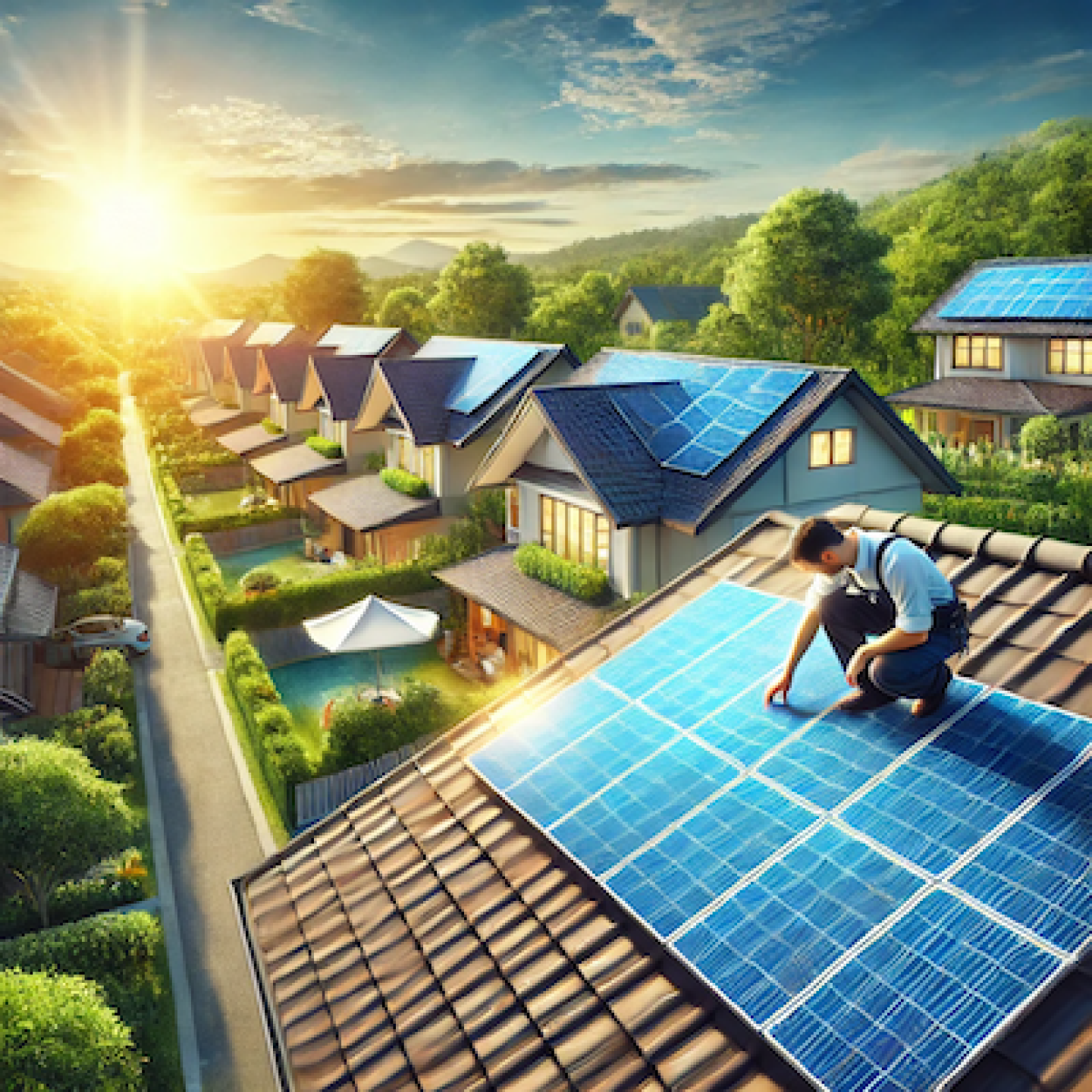
Solar Energy Myths debunked

Top Myths About Solar Energy Debunked

As the popularity of solar energy grows, so do the misconceptions surrounding it. While solar power has proven to be an efficient, cost-effective, and sustainable energy solution, myths and misunderstandings can deter homeowners and businesses from making the switch. This article addresses and debunks the top myths about renewable energy and solar power, providing clarity on what solar energy can truly offer.


Myth 1: Solar Panels Don’t Work on Cloudy or Rainy Days

Reality: Solar panels generate electricity even on cloudy or rainy days. While solar production is highest in direct sunlight, panels still capture and convert diffused light into energy during overcast conditions. Modern solar panels are designed to be highly efficient, ensuring reliable performance even in less-than-perfect weather.


Myth 2: Solar Energy is Too Expensive

Reality: Solar energy is more affordable than ever. Costs for solar panel systems have dropped by over 70% in the last decade. Additionally, incentives like the Federal Investment Tax Credit (ITC), state-level rebates, and net metering programs significantly lower the upfront and ongoing costs of solar installations.

Solar panels also provide long-term savings by reducing utility bills and protecting against rising electricity rates, making solar energy a sound financial investment.


Myth 3: Solar Panels Require Constant Maintenance

Reality: Solar panels are low-maintenance. They are designed to withstand harsh weather conditions, including rain, snow, and wind. Occasional cleaning to remove debris, dirt, or bird droppings is typically sufficient. Most solar systems come with warranties of 25 years or more, providing additional peace of mind.


Myth 4: Solar Panels Will Damage My Roof

Reality: When installed by a professional solar company, solar panels can actually protect your roof by shielding it from UV rays, weather, and wear. Properly installed panels are secure and do not cause damage. In many cases, they extend the lifespan of the roof underneath them.


Myth 5: Solar Energy is Only for the Wealthy

Reality: Solar energy is accessible to a wide range of income levels thanks to financing options like solar loans, leases, and Power Purchase Agreements (PPAs). Many states also offer programs to help low- and moderate-income households access solar energy.


Myth 6: Solar Panels Don’t Work in Cold Climates

Reality: Solar panels are actually more efficient in cooler temperatures. They produce electricity from light, not heat, meaning they perform well in both hot and cold climates. In fact, cold temperatures can improve solar panel efficiency by reducing resistance in the electrical system.


Myth 7: Solar Energy Systems Aren’t Durable

Reality: Modern solar panels are built to last. They are designed to endure extreme weather conditions, including hail, high winds, and heavy snow. High-quality panels are rigorously tested and come with warranties that ensure long-term performance.


Myth 8: Solar Energy Isn’t Worth the Investment

Reality: Solar energy offers immediate and long-term returns on investment. By reducing or eliminating utility bills, homeowners and businesses often recover their initial costs within 5-10 years. With a lifespan of 25+ years, solar panels continue to generate savings for decades.


Myth 9: Solar Panels Are Difficult to Recycle

Reality: The solar industry has made significant strides in recycling technology. Many components of solar panels, including glass, aluminum, and silicon, are recyclable. Programs and facilities dedicated to recycling panels are becoming more widely available as the industry grows.


Myth 10: Solar Energy Won’t Work With My Home or Business

Reality: Solar energy systems can be customized to fit almost any property. From rooftop installations to ground-mounted systems, solar companies can design solutions tailored to individual energy needs and property constraints.


Conclusion

Solar energy is an efficient, affordable, and sustainable power source, but myths and misconceptions can prevent people from taking advantage of its benefits. By understanding the realities of renewable energy, homeowners and businesses can make informed decisions about switching to solar power.

For more information or to explore your options, contact a trusted solar company today.

References

  1. https://www.energy.gov/eere/solar/articles/debunking-myths-about-solar-energy
  2. https://www.seia.org/initiatives/solar-energy-myths-and-facts
  3. https://www.nrel.gov/docs/fy19osti/73822.pdf
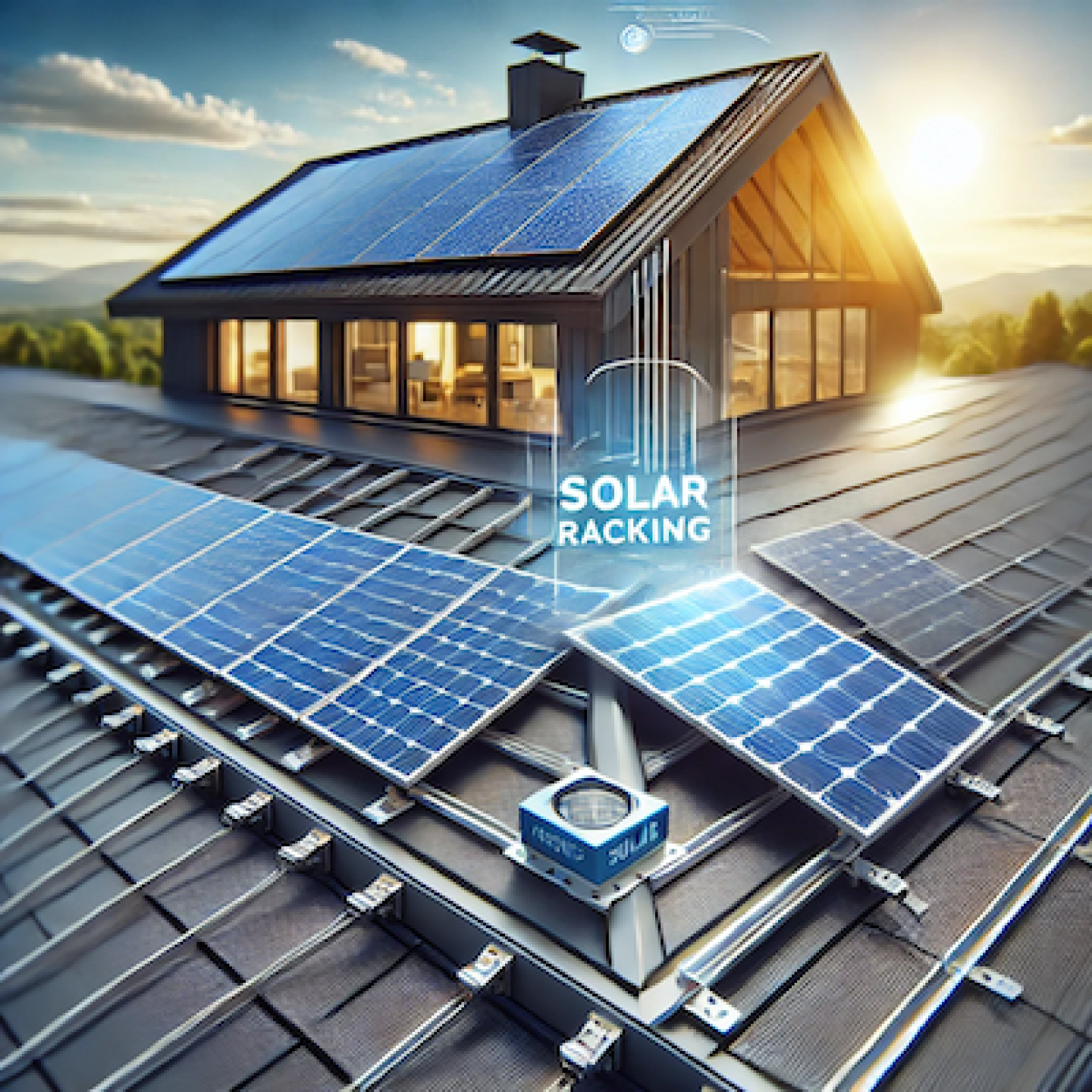
Solar Racking

Product Spotlight: Solar Stack Solar Racking System

Product Spotlight: Solar Stack Solar Racking System

As the solar industry continues to innovate, solar racking systems have become more advanced, offering efficient, durable, and installation-friendly solutions. One standout system is the Solar Stack racking system, designed to simplify the process of installing solar panels on residential and commercial properties. With its non-penetrating approach and ability to work on various roof types, Solar Stack is gaining popularity among solar energy companies.

This article will explore Solar Stack’s main features, how it works, the key benefits of using it, and some potential concerns to consider for your solar installation company.


Main Features of Solar Stack

  1. Non-Penetrating System
    Solar Stack is a non-penetrating solar racking system, which means it doesn’t require drilling holes into the roof for installation. It uses a high-strength adhesive foam to secure the racking system to the roof, making it a popular choice for solar panel installers looking to avoid roof damage.
  2. Works on Various Roof Types
    The Solar Stack system can be used on a variety of roof types, including flat and sloped roofs. It is highly compatible with roofing materials such as TPO, EPDM, concrete, and modified bitumen, making it a versatile option for solar installation companies working on diverse projects.
  3. Wind Load and Durability
    Solar Stack is tested and certified to withstand high wind loads, meeting the strict Miami-Dade County NOA (Notice of Acceptance) standards. This makes it a top choice for solar installations in hurricane-prone areas where wind uplift requirements are stringent.
  4. Quick Installation Process
    Since Solar Stack requires no mechanical fasteners or roof penetrations, it significantly speeds up the installation process. This can reduce labor time for solar energy companies and allow for faster project completion.

How Solar Stack Works

The Solar Stack racking system uses a foam adhesive that is applied directly to the roof’s surface. The foam creates a strong, permanent bond with the roof, eliminating the need for roof penetrations. Once the adhesive has cured, mounting blocks are installed on top of the foam to securely hold the solar panels in place. The system is designed to provide a stable foundation for solar power systems while maintaining the integrity of the roof structure.


Main Benefits of Solar Stack

  1. No Roof Penetrations
    One of the biggest advantages of the Solar Stack system is that it eliminates the need for roof penetrations. This greatly reduces the risk of roof leaks, water damage, or voiding roof warranties. For property owners who are concerned about maintaining their roof’s longevity, this is a major selling point.
  2. Faster Installation
    Solar Stack’s adhesive system allows for much faster installation compared to traditional racking methods. This can reduce the overall project timeline for solar contractors, which in turn leads to cost savings.
  3. Hurricane Resistance
    Solar Stack is engineered to withstand high wind speeds, making it an excellent choice for properties located in areas prone to hurricanes or extreme weather. Its wind resistance, combined with the non-penetrating installation method, ensures that the solar panels remain securely attached even under harsh conditions.
  4. Lightweight
    The Solar Stack system is lightweight, which reduces the load on the roof. This is beneficial for older buildings or roofs that have lower load-bearing capacity, making it easier for solar energy companies to install without major structural modifications.
  5. Preserves Roof Warranty
    Since Solar Stack is a non-penetrating solution, it is less likely to void roof warranties. This is a crucial advantage for homeowners and commercial property owners who want to ensure their roof’s warranty remains intact after a solar power system installation.

Possible Concerns

  1. Adhesive Reliability Over Time
    Although the adhesive used by Solar Stack is rigorously tested, there may be concerns about its long-term durability in certain climates, such as areas with extreme heat or heavy rain. Over time, adhesives can degrade, potentially compromising the system’s security.
  2. Roof Type Limitations
    While Solar Stack is compatible with many roof types, it may not be suitable for every roofing material or configuration. For example, roofs with very steep pitches or certain coatings may have bonding issues with the adhesive, requiring further assessment before installation.
  3. Installer Expertise
    Since Solar Stack is a relatively new technology, not all solar contractors may be experienced with its installation process. It’s important to work with certified or experienced installers to ensure the adhesive is applied correctly.

Conclusion

The Solar Stack racking system offers a highly efficient, non-invasive solution for mounting solar panels on various roof types. With benefits such as faster installation, no roof penetrations, and resistance to high winds, it is an ideal option for property owners in areas with harsh weather conditions, particularly hurricane-prone regions. However, careful consideration of the roof type and long-term adhesive reliability is essential to ensure a successful installation.

For solar companies, Solar Stack can be a game-changer in terms of installation efficiency and reducing risks associated with traditional racking methods. By consulting experienced installers, you can make the best decision for your solar project and ensure a long-lasting, high-performance solar energy system.


References

  1. Solar Stack Racking System Overview
  2. Miami-Dade NOA Certification
  3. Roofing Materials and Solar Installations
  4. Wind Load Standards and Solar Panels
  5. Preserving Roof Warranty with Solar


Can I Really Get Solar Energy for $0 Down & $0 Out of Pocket

You Can Get Solar Energy For No Money Down and No Money Out of Pocket, but it’s not free.

In this article, we are going to dive into what exactly $0 Down $0 Out of Pocket means in regards to adding solar panels to your home.  If you are shopping for solar panels in Orlando or Florida then you have inevitably have heard the Phrase “Get Solar Energy for $0 Down and $0 Out of Pocket”.  This claim is designed to get you excited about adding an energy efficient product without any money involved. That might be where there begin to be some confusions. Here are some simple explanations to this statement as well as some guidelines to follow to get your best deal on solar panels.

Check out other great videos to help you understand more about solar energy and Solar Companies Youtube – Emerald Sun Energy Channel

What does $0 Down (NO Money Down) mean? First off it is NOT FREE.  You are buying something. However, if you are able to qualify for available financing then there is No Money Down as the entire purchase can be funded because many of the financing options available for solar companies do not require any money down.  Hence the entire solar project will be funded by the financing company.

What does $0 Out oF Pocket (No Money Out of Pocket) mean? This statement may be the one that causes the most confusion because it often leads people to believe that it is free.  Again it is NOT FREE, you are buying something. However, if you qualify for available funding it is true that you will have $0 Out of Pocket. The easiest way to understand this is to look at the example below.  What it points out is purchasing a solar panel system for your home will not affect your budget. Meaning you can use the money you already are paying the power company to instead pay for your solar power system that will improve your home’s value and convert a variable expense (power bill) into a profitable asset (solar panel system).  In most cases, you will actually be cash positive depending on which financing option you choose. So you can purchase your system with the money you already spend because your solar panel financing payment will be less than the amount of money you save on your power bill by switching to solar.

What do I need to do to qualify for this solar program?  Simply call Emerald Sun Energy a local Florida Solar Company located in Orlando and serving all of Central Florida, We will first do a customized energy consumption analysis to determine the size of the solar panels system you need.  We will then draw out a solar panel spec drawing so you can see how the panels will look on your roof. Then you can choose the financing option that best meets your needs and fill out the online instant approval application, we will have a decision within minutes of application.  The basic qualifiers are you will need a 680 credit score or greater to qualify. The financing company will also be looking at your debt to income ratio to determine if you are a good candidate for a solar energy system. Usually, a debt to income below 45% with a household income of $50,000 is able to be approved.

Example of how $0 Down $0 Out of pocket looks like:

With the advanced additions of Solar Energy Financing Florida Homeowners can get solar for No Money Down and No Money Out of Pocket

With the advanced additions of Solar Energy Financing Florida Homeowners can get solar for No Money Down and No Money Out of Pocket

First, we must figure out the amount of money you will be saving on your power bill every month to find out how much money you have available on a monthly basis to pay for the system.  In the above example of an actual solar customer, before they started using solar there power bill was $231 per month and after they switched to solar energy their power bill dropped to $29 per month.  Which is a monthly savings of $202 per month? So that means so long as we have a financing option that requires less than a $202 a month payment then we will be able to provide solar for $0 Out of Pocket because we are just redistributing money you are already spending to convert an expense into an asset.

Next, we will examine the financing options offered by the above Orlando Solar Company.

In the above example, you can see the available financing options for the customer where a 12 Year or 144 payments of $199 which is $3 less then they would pay the power company.  Or a 20 year (240 payment) option would be $162 per month essentially saving customer on average $40 over what they would have paid the power company. That is a yearly positive cash flow of nearly $500 plus they improved the value of their home and reduced their carbon footprint.  WOW!!

Please keep in mind in the above example we are using Net Sales Price which is the price of the Solar Panel System after you received your 30% Federal Tax Credit.  If you somehow do not qualify for the tax credit you will still be able to get the system for no money out of pocket but it would be only on the 20-year option that would accomplish this.  Either way, you are purchasing an asset using someone else’s money to pay for it. This is one of the biggest ways wealthy people keep and grow their wealth. You can see more about that is this video “Solar Energy is a Better Investment Than The Stock Market”

As you can see from the explanation and example provided $0 Down $0 Out of Pocket isn’t free but it is a tremendous opportunity for homeowners to be able to add Solar Energy to there home without affecting their monthly budget.  Please keep in mind that the 30% Federal Tax Credit expires at the end of 2019 so your window for taking advantage of such a great opportunity is closing. There will be a couple of years of reduced tax credits but you will have missed out on the biggest one, while you can do it without affecting your budget.

Questions you should ask your solar company – part 5

Questions you should ask your solar contractor – part 4

29. What happens during the solar power installation process?

The Solar power installation process consists of engineered drawing that is submitted for permit approval.  After permit approval and installation, a date is scheduled. Most installations for homes will take 1-2 days. After installation, it will be submitted for a final inspection.  After the inspection is completed your local power company is notified with an interconnection agreement which they will come out and swap out your meter for a bidirectional meter that will be able to monitor the power your solar power system will produce for the power company.  The total installation process takes 4-8 weeks depending on permitting, interconnection agreement and weather.

30. Should I ask for a solar monitoring system for my solar panels?

Yes.  Most solar contractors will not include the monitoring.  You would be advised to ask for it. You can always get your energy output readings from the inverter if it is a string inverter system.   However, you will have to go to the inverter and familiarize yourself with its report settings in order to get your solar energy production readings. It is a microinverter system you will need monitoring or you will just have to rely on the power companies tracking numbers.  If you have a string inverter system by SolarEdge w/ power optimizers you need to have the cellular chip upgrade to your system. Then you will be able to track the energy production from your solar panel system through an app you can download onto your phone. You will be able to see the day to day energy production, weekly, monthly and yearly solar energy output.

31. Do I need to install solar batteries with my solar power system?

In Orlando Florida, you are able to tie the system into the power companies grid nullifying the need for the solar batteries.  You might want to consider a Tesla Powerwall as a backup generator system. Keep in mind when you use a Tesla Powerwall it will not back up your entire system but rather provide power to critical energy sources during a power outage.  Mainly your main loads are what you are backing up. Refrigerator and stove with an outlet for a light and fan. If you wanted to back up for the entire house you would probably need 3 Tesla Powerwalls. I typically do not recommend battery backups where grid access is available.  There are a few reasons for this. First, off I feel a traditional generator is a better power outage backup then solar batteries, because when the power goes out it is usually accompanied by bad weather that will reduce the systems overall production and leave you with intermittent power outages.  Secondly, Solar battery solutions only last 7-10 years, meaning you will have to replace the batteries 3 times during the life of your solar panel systems life, more than doubling the cost of the system. Finally, solar batteries put off a strong magnetic field that I do not like putting near the home.  If you had a shed that was 100 feet from the home then I might put the batteries there. There are some great whole home generators that you can install for the same price that will actually give you enough power to power your entire home for a week.

32. Can the local Homeowners Association (HOA) stop me from installing a solar power system on my building?

It is illegal for an HOA to prevent you from installing solar panels on your home.  Some will have requirements such as they need to face the back of the house but even those are speculative.  Meaning if the performance of the system mandates that the solar panels need to face the front of the house for peak performance then they can not stop you from placing them there.  I do recommend checking with the HOA for any guidelines they request and whenever possible adhere to those requests. In cases when you cannot adhere to their guidelines then your solar company can send them a letter explaining why we must break there suggested guidelines.

34. How will Solar Panels be mounted?

Solar panels will be mounted to a racking system and it is that racking system that will be mounted to the roof.  More specifically to your homes truss system when available. That means no solar panels will be mounted directly to your roof.  This method reduces and potential leaking factors that may arise if the panels were installed directly to the roof.  Ironridge solar mounts are the most durable mounts on the market and graded to withstand 140 mph winds.

For more Questions you should ask your solar company check out our ongoing series:

Questions You Should Ask Your Solar Company – Part 1

Questions You Should Ask Your Solar Company – Part 2

Questions You Should Ask Your Solar Company – Part 3

Questions You Should Ask Your Solar Contractor – Part 4

Questions you should ask your Solar Company – part 3

Questions you should ask your Solar Company – Part 3

16. Which is better – solar Energy loans or solar Energy leases?

Increased options available for solar energy loans have made them the optimal choice over a solar lease. Two distinct differences apply to solar energy financing, first you will receive a 30% federal tax credit and second it will increase the value of your home. Also, solar financing options now are available as low as 2.99% – 5.99%.  In Florida, Leasing a solar panel system is illegal and you have to tie the solar energy system to the electric companies electrical grid.  Leasing options are not as favorable because of the terms and that you do not receive tax credits or the increased value of your home. However, when leasing a solar panel system the leasing company is responsible for all of the maintenance of the system while when purchasing the homeowner is. Many solar companies will also include maintenance of the system but you will have to ask them to include it in most cases.

17. What is the difference between secured solar loans and unsecured solar loans?

A secured solar loan would usually entail an equity position on the home where an unsecured solar loan would operate more as straight credit. The advantages of a secured solar loan would be getting to write off the interest paid from the loan as well as getting a low rate without additional financing fees. The advantage of the unsecured solar loans is that there is no additional equity position/lean put on the home. There are also very attractive low rates available but you will usually have to pay upfront financing charges to get them

18. How do I choose the best solar loan?

To get the best solar loan you have to compare the total cost of the loan. Most people make the mistake of looking at the price of the solar panel system over factoring in the monthly rate and the term on the loan.  So when you look at the actual total of the loan it will calculate the total amount of money you will pay for the solar energy system including the interest.  To figure out the total cost of the loan you need to multiply the monthly payment by the number of payments(term) of the solar loan. That will give you your true system cost and allow you to compare your best deal.  Most Orlando Solar Companies will try to show you a lower cost of the system but have a higher monthly payment then a more expensive system because they are charging you a higher interest rate.  To get a lower interest rate the financing company will charge an additional financing charge which will increase the sticker price of the solar panel system.  However, because of the lower interest rate, your actual total cost of the system will be less.  This is important to understand and to get more information on this and other sales practices used by solar companies you can read “The Secret Guide to Buying Solar”.

19. Can I afford to go solar?

The better question is can you afford not to… The price of solar is now very attractive with the lowest rates ever (70% less than in 2009) combined with the current 30% tax credit and low financing options it is usually at least $50 a month cheaper than paying the power company and as time goes by the amount you save only increases.  Consumer Reports came out in 2016 and said there has never been a better time to go solar and that remains to be true.

20. Is my roof suitable for solar panels?

If your roof is less than 10 years old your roof is probably a good fit for a solar panel system. The best pitch that works for solar is 30 – 45% which includes over 90% of home roof pitches. Solar Energy will work with other pitches but you might sacrifice some efficiency in the process.

21. What size should the solar energy system I get?

The average system size that is purchased in the US is a 7KW solar power system. However, this differs from what size system you need. To determine the actual size that is needed you will need to know your monthly average kWh. In Orlando, Florida if you have $190 a month power bill you would require a 10KW solar panel system to produce enough energy to offset your electric power bill.  Emerald Sun Energy is an Orlando Solar Company that services the entire central Florida region Including Daytona, Orlando, Melbourne, Tampa, Vero, Sebation, Kissimmee, Lake County, Seminal County, Brevard County, Polk County and everywhere in between.

For additional Questions you should ask your solar company please see related posts:

The 7 Most Important Question to Ask Your Solar Company – part 1

Questions you should ask your Solar Company – part 2

emerald-sun-energy-logo-600

Contact us

2151 Consulate Dr

Orlando, FL 32837

info@emeraldsunenergy.com

Office: (407) 504-0922

Florida Lic #CVC57145

Lic #EC13010058