Commercial Solar Battery Sizing

Sizing Commercial Solar Batteries - How To & Common Mistakes To Avoid

Commercial Solar Battery Sizing

There is a notable difference when sizing batteries for larger commercial solar systems compared to residential systems. Commercial solar battery sizing generally follows the same principles as residential battery sizing but involves larger capacities, more detailed analysis, and considerations specific to the commercial environment. Here are some key factors that make a difference:


Key Factors in Commercial Solar Battery Sizing

  1. Higher Energy Demands
    Commercial buildings typically consume significantly more energy than residential homes, meaning the battery size will need to be scaled accordingly. The load profile is more complex, often including equipment like HVAC systems, industrial machinery, elevators, and lighting systems, all of which require higher energy capacity and longer backup duration.
  2. Demand Charges and Peak Load Management
    Many commercial facilities face demand charges, which are fees based on the highest rate of electricity consumption during peak periods. Sizing a battery system for a commercial setting often involves managing these demand charges. Batteries can help reduce these charges by supplying power during peak demand times.For Commercial Solar Companies, sizing is not just about storing energy for backup; it's also about optimizing the battery to discharge during peak usage periods to avoid demand charges.
  3. Longer Duration Requirements
    Commercial buildings may require longer backup periods compared to residential homes. Essential systems (e.g., servers, security systems, and operational machinery) need to be powered for extended periods, which calls for larger batteries with higher energy storage.
  4. Scalability and Modular Systems
    Commercial batteries are often modular and scalable, meaning businesses can install multiple battery units to meet their energy needs. This allows the system to be expanded over time as the energy consumption of the building increases.

Sizing Equations for Commercial Solar Batteries

1. Determine Energy Needs (kWh)

The first step is to calculate the total energy consumption of the commercial facility. This involves identifying all critical systems and their daily energy usage.

java
Total Energy Consumption (Wh) = Power Rating (W) × Hours of Operation (h)

For example, if a commercial facility uses 100 kW of power for 10 hours a day:

100,000 W × 10 hours = 1,000,000 Wh or 1,000 kWh

2. Demand Load and Peak Management

Commercial solar batteries are often used for peak shaving to reduce demand charges. The battery needs to be sized not only to meet the total daily consumption but also to handle spikes in energy usage during peak demand times.

java
Peak Energy Consumption (kWh) = Peak Load (kW) × Duration of Peak Period (h)

For example, if the peak load is 150 kW during a 3-hour period:

150 kW × 3 hours = 450 kWh

3. Depth of Discharge (DoD)

Commercial batteries, like residential ones, have a Depth of Discharge (DoD), which affects how much of the battery’s capacity can be used. Commercial systems often use high DoD batteries, typically around 80-90%.

java
Required Battery Capacity = Energy Consumption / Depth of Discharge

If a commercial facility needs 1,000 kWh and the battery has a DoD of 90%:

1,000 kWh / 0.90 = 1,111 kWh battery capacity

4. Consider Efficiency and Inverter Capacity

Commercial solar inverters and battery systems have efficiency losses during energy conversion. If the battery system has an 85% efficiency, the battery capacity should be adjusted:

java
Adjusted Battery Capacity = Required Battery Capacity / System Efficiency

For example, with a system efficiency of 85%:

1,111 kWh / 0.85 = 1,307 kWh battery capacity

5. Future Energy Needs and Scalability

Commercial systems must account for future growth. Commercial batteries can be modular, so the system should be sized to allow for scalability based on projected energy demand increases.

6. Surge and Backup Duration

Many commercial systems have larger surge loads, such as elevators or industrial equipment. Batteries need to be sized to handle these loads, especially if backup duration is required for extended hours or even days.


Benefits of Commercial Solar Battery Systems

  1. Cost Savings and Demand Management
    One of the biggest advantages of commercial solar batteries is the ability to lower electricity costs by reducing demand charges. These systems can store energy generated during off-peak times and discharge it during peak usage, leading to substantial savings.
  2. Energy Resilience
    In regions where grid outages are common, a commercial solar battery system ensures continuous power for critical operations like HVAC systems, refrigeration, and security systems. This resilience can be crucial for businesses that can't afford downtime.
  3. Environmental Impact
    Commercial solar batteries help businesses reduce their reliance on fossil fuels by storing clean, renewable energy. This leads to lower greenhouse gas emissions and a more sustainable operation.
  4. Improved Energy Independence
    With commercial solar energy systems and battery storage, businesses become less dependent on the grid. This not only provides financial benefits but also positions companies as leaders in sustainability.

Common Mistakes When Sizing Commercial Solar Batteries

Before diving into the concerns, it’s important to note some of the most common mistakes businesses make when sizing and implementing commercial solar battery systems. Avoiding these pitfalls can ensure a more efficient and cost-effective energy storage solution.

1. Underestimating Energy Needs

A common mistake is underestimating the actual energy requirements of a commercial facility. This can lead to a battery system that’s too small, which won’t provide sufficient power during peak times or outages. It’s essential to carefully assess the facility’s energy usage and peak loads when sizing the battery to avoid this issue.

2. Ignoring Peak Load Management

Businesses often fail to account for demand charges and peak load management, which are critical for commercial operations. Simply installing a battery system without considering peak usage periods can result in suboptimal savings. Properly sizing a commercial solar battery to handle peak load and discharge during these times is key to maximizing savings.

3. Improper Depth of Discharge (DoD) Calculations

Misunderstanding or ignoring the Depth of Discharge (DoD) can lead to a battery being overused or underused, which impacts its lifespan and efficiency. Commercial solar batteries should be sized with an appropriate DoD to ensure they are used optimally without over-discharging.

4. Overlooking Future Expansion

As a business grows, energy needs will likely increase. Failing to account for future growth can result in a battery system that quickly becomes inadequate. Choosing modular systems and allowing for scalability can help future-proof the battery installation.

5. Inadequate Inverter Sizing

The inverter is responsible for converting the DC electricity generated by solar panels and stored in the battery into usable AC power. Choosing an inverter that is too small to handle the system’s load can lead to inefficiencies and a lack of backup power during critical times. It’s essential to size the inverter properly for both peak and continuous loads.

Possible Concerns with Commercial Solar Battery Systems

  1. High Initial Costs
    The upfront cost of installing a commercial solar battery system can be high, especially for larger businesses with significant energy needs. Although the long-term savings often outweigh these costs, the initial investment can be a barrier for some companies.
  2. Space Requirements
    Commercial battery systems often require significant space, especially if they are modular and designed to scale. Businesses must ensure they have adequate room for the installation, which may be challenging in urban areas.
  3. Battery Lifespan
    Like all batteries, commercial solar batteries have a limited lifespan, typically around 10-15 years. Over time, battery performance can degrade, and replacement costs should be factored into long-term planning.
  4. Maintenance Needs
    While solar panels themselves require little maintenance, commercial battery systems may need regular inspections and servicing to ensure they operate efficiently.

Conclusion

For commercial solar batteries, the sizing principles are similar to residential systems, but with added complexity due to higher energy demands, demand charge management, scalability, and longer backup requirements. Commercial batteries are typically larger and modular, and the system design is tailored to optimize both energy savings and peak demand reduction.

If you’re considering a commercial solar battery system, it’s essential to work with a commercial solar contractor to properly assess energy needs and design a system that meets your business's specific requirements.


References:

  1. https://www.energy.gov/eere/solar/commercial-solar-batteries
  2. https://www.forbes.com/home-improvement/solar/commercial-solar-storage-systems/
  3. https://www.cleanenergyauthority.com/solar-energy-news/commercial-solar-benefits
  4. https://www.solarpowerworldonline.com/2023/02/how-to-size-commercial-solar-battery-storage/
  5. https://www.nrel.gov/docs/fy19osti/74109.pdf
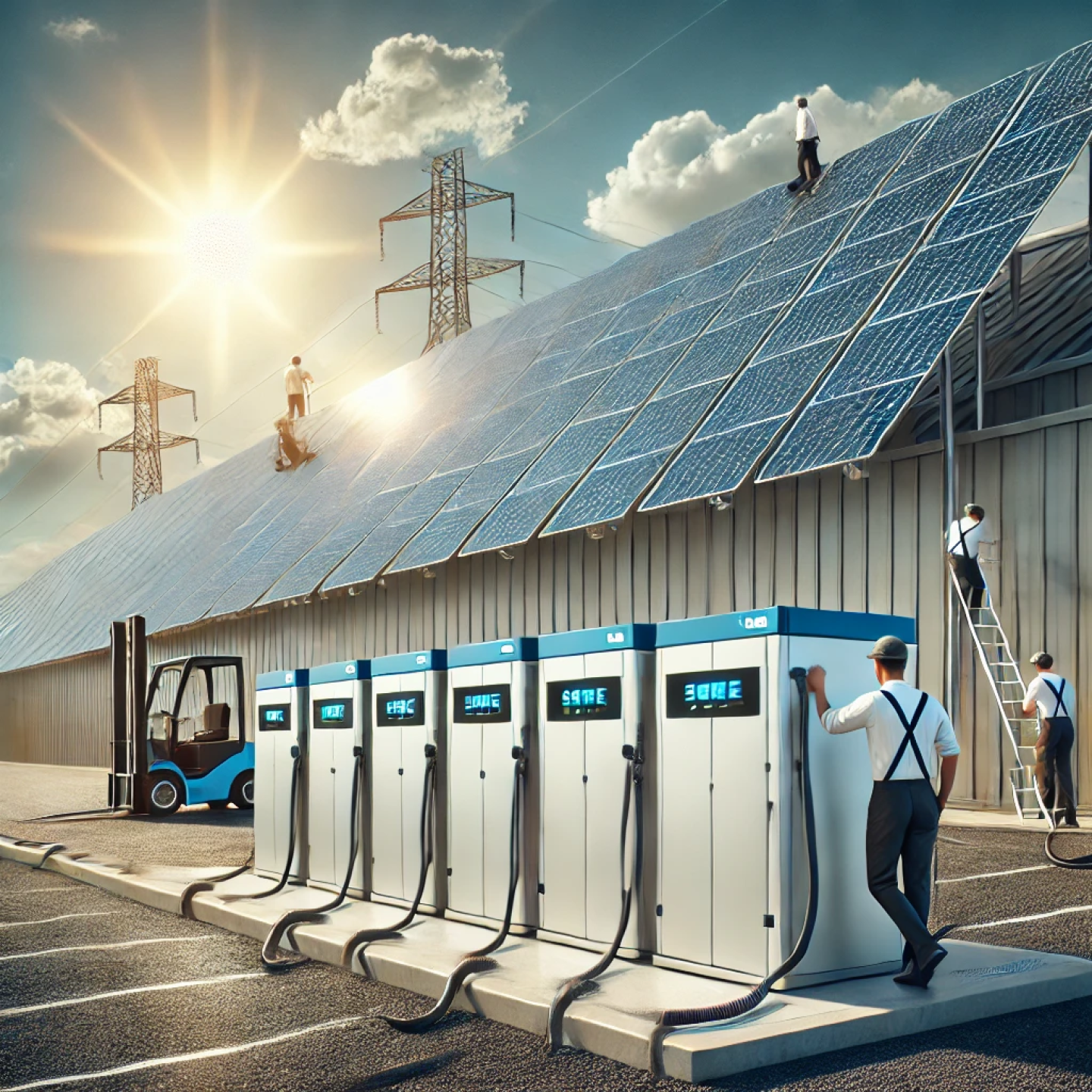
Commercial Solar Batteries

Commercial Battery Business Report

Commercial Battery Business Report

Introduction

In Florida, commercial battery storage systems are becoming vital for businesses aiming to optimize energy use, reduce costs, and enhance sustainability. With the state's abundant sunshine, integrating commercial solar power batteries in Florida offers significant advantages. This report explores the benefits, implementation steps, equipment needs, and market trends related to commercial solar batteries in Florida.

Benefits of Commercial Solar Batteries in Florida

Cost Savings

  • Peak Shaving: By using stored solar energy during high-demand periods, Florida businesses can significantly lower energy bills. This is especially beneficial in industries where peak demand charges form a large portion of energy costs.
  • Time-of-Use Optimization: Businesses in Florida can store solar energy generated during off-peak hours and use it during peak hours, reducing energy costs and improving overall energy management.
  • Reduced Demand Charges: Leveraging commercial solar batteries allows businesses to reduce peak power consumption, thereby lowering demand charges and achieving substantial cost savings.

Energy Independence

  • Grid Independence: A commercial battery system reduces dependence on Florida's electrical grid, providing greater energy autonomy, especially for businesses in remote areas or regions with unreliable grid connections.
  • Renewable Integration: Commercial solar batteries in Florida maximize the use of renewable energy, ensuring a steady supply even when solar generation is low.
  • Backup Power Supply
  • Uninterrupted Operations: Solar power batteries provide reliable backup power during grid outages, ensuring that critical operations in Florida businesses continue without interruption.
  • Enhanced Resilience: By providing an alternative power source, commercial solar batteries enhance the resilience of a business's energy system.

Environmental Benefits

  • Reduced Carbon Footprint: Utilizing stored solar energy in Florida lowers greenhouse gas emissions and reduces the overall carbon footprint.
  • Sustainable Energy Use: Commercial solar batteries promote the use of clean, renewable energy sources, supporting the transition to a sustainable energy future.
  • Grid Services and Incentives
  • Grid Stabilization: Commercial solar power batteries in Florida can provide valuable ancillary services to the grid, such as frequency regulation and voltage support.
  • Incentives and Rebates: Many utilities and local governments in Florida offer incentives, rebates, and tax credits for businesses that install commercial solar battery systems, reducing upfront costs and improving ROI.
  • Enhanced Energy Management
  • Load Shifting: Load shifting allows Florida businesses to move energy consumption from peak to off-peak periods, avoiding higher energy costs and optimizing energy usage.
  • Demand Response: Florida's demand response programs enable businesses to reduce or shift energy usage during peak periods, providing additional revenue streams and reducing energy costs.

Operational Efficiency

  • Optimized Energy Use: By storing and using solar energy efficiently, commercial solar batteries improve overall operational efficiency, lowering operating costs and improving productivity.
  • Reduced Energy Waste: Energy storage systems minimize energy waste by storing excess solar energy for later use, improving overall energy efficiency.

Steps to Implementing Commercial Solar Batteries in Florida

Assessment and Planning

  • Energy Audit: Conduct a thorough energy audit to analyze a business's energy usage patterns, identifying areas of high consumption, and determining potential energy savings.
  • Feasibility Study: Evaluate the technical and economic viability of implementing a commercial solar battery system in Florida, considering factors like cost savings, ROI, and regulatory requirements.
  • Goals and Objectives: Define clear goals and objectives to provide a roadmap for implementation and help measure the system's success.
  • System Design and Sizing
  • Load Calculations: Ensure the battery system is appropriately sized to meet the business's energy needs.
  • Battery Sizing: Select a battery with the capacity to store the required amount of energy and deliver it when needed.
  • System Configuration: Design the system configuration to optimize energy storage and usage while ensuring safety and reliability.

Equipment Selection

  • Battery Type: Choose the appropriate battery type, such as lithium-ion, lead-acid, or flow batteries, each with advantages and disadvantages.
  • Inverters and Converters: Select inverters and converters that ensure efficient power conversion and reliable operation.
  • Energy Management System: Implement an EMS that monitors and controls the solar battery storage system, optimizing energy usage and storage.

Installation and Commissioning

  • Site Preparation: Prepare the site for installation, ensuring that the location is suitable for the solar battery storage system.
  • Installation: Install the solar battery storage system and related equipment according to manufacturer guidelines and industry standards.
  • Commissioning: Test the battery storage system to ensure it operates correctly and meets the specified performance criteria.
  • Integration and Optimization
  • System Integration: Integrate the battery storage system with existing energy systems to ensure seamless operation and efficient use of stored solar energy.

Optimization: Fine-tune the battery storage system to maximize efficiency and performance.

Monitoring and Maintenance

  • Real-Time Monitoring: Implement real-time monitoring to track the performance of the solar battery storage system continuously.
  • Scheduled Maintenance: Regular maintenance ensures the long-term reliability and performance of the solar battery storage system.

Commercial Solar Battery and Solar Integration in Florida

Overview

Integrating commercial solar battery storage with solar power systems creates a synergistic energy solution that maximizes the benefits of both technologies. This integration allows Florida businesses to harness solar energy more effectively, store excess energy for later use, and achieve greater energy independence and cost savings.

Benefits of Integration

  • Maximized Solar Utilization: Combining solar panels with battery storage allows businesses to store excess solar energy generated during peak sunlight hours and use it during periods of low solar generation.
  • Enhanced Reliability and Resilience: Integration provides backup power during grid outages, ensuring continuous operation of critical systems and enhancing energy reliability.
  • Cost Savings: By using stored solar energy during peak hours, businesses can lower their electricity bills and avoid demand charges.
  • Environmental Impact: Utilizing solar energy reduces reliance on fossil fuels, lowering the carbon footprint and supporting sustainability goals.

Implementation Steps

  • System Design and Sizing: Determine the size of the solar array and battery capacity based on the business’s energy requirements.
  • Equipment Selection: Choose high-efficiency solar panels and compatible inverters and batteries that align with the system’s requirements.
  • Installation and Integration: Install the solar panels and battery storage system according to best practices, ensuring proper integration.
  • Monitoring and Optimization: Implement an energy management system (EMS) to monitor and optimize energy storage and usage.

Financial Considerations

  • Initial Investment: Consider the cost of solar panels, battery storage systems, inverters, and installation, along with available incentives and rebates.
  • Operating Costs: Budget for ongoing maintenance and monitor energy savings to assess the financial benefits.

Future Outlook

  • Technological Advancements: Expect continued advancements in solar panel and battery technology, improving the efficiency and cost-effectiveness of integrated systems.
  • Market Trends: The integration of commercial solar battery storage with solar power in Florida is expected to grow as businesses seek to maximize energy efficiency and sustainability.

Other Important Considerations

  • Regulatory and Compliance: Ensure the system complies with Florida's local, state, and federal regulations and adheres to safety standards.
  • Financial Considerations: Evaluate the initial investment, operating costs, and potential incentives to determine ROI.
  • Environmental Impact: Plan for the proper recycling and disposal of batteries to minimize environmental impact and promote sustainability.
  • Vendor Selection: Choose reputable vendors with experience in commercial solar battery systems and consider warranty and support services.
  • Future-Proofing: Ensure the system is scalable and can be upgraded with future technology advancements.

Commercial Solar Battery Outlook and Market Predictions for Florida

  • Market Growth: The demand for commercial solar batteries in Florida is expected to grow significantly, driven by the state’s abundant sunshine and increasing focus on sustainability.
  • Technological Advancements: Innovations in battery technology and integration with smart grids will enhance energy management and efficiency.
  • Regulatory and Policy Support: Supportive policies and government initiatives in Florida will further boost the market, promoting renewable energy integration and storage solutions.
  • Economic and Environmental Impact: Cost reductions and environmental benefits will drive adoption, making commercial solar batteries more accessible and beneficial for Florida businesses.
  • Market Challenges: Address supply chain constraints and regulatory uncertainties to ensure continued growth and adoption.

Future Outlook: The commercial solar battery market in Florida is poised for substantial growth, with businesses investing in energy storage solutions to thrive in the evolving energy landscape.

Conclusion

Commercial solar batteries in Florida offer significant benefits in cost savings, energy independence, and sustainability. By following a structured implementation process, accurately calculating energy loads, selecting appropriate equipment, and considering regulatory and financial factors, businesses can successfully integrate solar battery storage systems. The market for commercial solar batteries in Florida is set for significant growth, driven by increasing demand, technological advancements, and supportive policies. Investing in solar battery solutions positions businesses to thrive in Florida's evolving energy landscape.

External References:

Solar Energy Industries Association (SEIA) on Solar + Storage
EnergySage: Commercial Solar Battery Guide
National Renewable Energy Laboratory (NREL) on Energy Storage
Florida Solar Energy Center (FSEC) Resources
U.S. Department of Energy: Energy Storage Integration


emerald-sun-energy-logo-600

Contact us

2151 Consulate Dr

Orlando, FL 32837

info@emeraldsunenergy.com

Office: (407) 504-0922

Florida Lic #CVC57145

Lic #EC13010058