Four common FAQs regarding Solar Energy

Four common FAQs regarding Solar Energy

Among food, communication channels, transport, etc., energy has become an essential element or, rather say, a basic human need in today's time. Without it, there is hardly any chore that can be completed in our routine. For instance, energy is required to keep the electric railways running to help people with commuting. It is also necessary for residential and industrial activities, so basically everything. 

Having such importance, it has become crucial to ponder over energy conservation and generation sources to keep its demands fulfilled in the near future. According to a report, worldwide energy consumption is anticipated to grow to 778 Etta Joule by the year 2035, which makes us worry about extensive energy-generating mediums such as solar panels. 

Speaking of, solar energy panels are extremely common in most households across the world, just because they have been pitched as a future need! When you bring up the subject' Solar Panel', several questions arise regarding their installation, usage, and especially maintenance. 

Do Solar Panels Need to Be Maintained Regularly?

A solar panel comprises little photovoltaic sheets which are responsible for transforming sunlight into usable energy. Often these photovoltaic cells are struck by pollen, bird poop, dust, and debris which hamper the lifespan of the solar panel. Therefore, the maintenance of solar panels is of utmost necessity to reinforce its full potential to generate energy. The installation and maintenance of solar panels installed in households are usually catered by solar panels consultants who carry out operative inspections to ensure that these devices are functioning well throughout the year.

Cleaning your solar panel allows the panel cells to absorb more quantum of light and, as more light hits the platform, it leads to more energy generation. Routine maintenance expands the lifespan of the solar panels, so it means you can invest your time in cleaning them on a bimonthly basis and keep on obtaining benefits from them for years to come. Although the required maintenance is relatively moderate, they can be cleaned with a water hose as the water pressure conveniently separates the dirt and makes it stainless. 

How Do You Maintain Solar Panels?

As we have briefly discussed the maintenance of solar panels, which experienced solar power consultants must ideally do, let us explore the ways you can maintain your solar panels in a do-it-yourself manner:

  1. First things first, get the solar panel installed in a way that it acquires optimal sunlight. For instance, if your rooftop gets a lighter shade, you must look for alternative ways to install your solar panel across the walls of the premises adjacently. This way, they work efficiently in drawing the maximum sunlight and lead to effective power generation. 
  2. Keeping track of the daily performance of a solar panel ensures its effective functioning. It provides you with vital metrics regarding average energy production units, their consistency over the weeks, and so on. These crucial values aid your understanding of the solar panel's working, and any inconsistency can further be taken up with the manufacturer for device rectifications. 
  3. Some homeowners also steer clear from cleaning their solar panels themselves. In these cases, portable self-cleaners come in handy because they act like tiny sprinklers that automatically wash the dirt off while you stay busy with your work. 

Is there a Maintenance Difference Between Ground Vs. Roof Panels? 

Often households get bewildered while choosing between a ground solar system or a rooftop panel. It is because they both have different installation approaches, and maybe require a little different maintenance. It depends upon the ease of access to the solar panels that make their maintenance simpler. Since the solar panels installed on your backyard ground are easier to make, you can conveniently clean them with soap water or a photovoltaic sheet cleaner. 

On the other hand, rooftop panels are slightly challenging to reach- you have to take up a ladder or call professionals for the same. Furthermore, not everyone plans on going to the rooftop to clean the solar panels. Thus, cleaning a roof panel might become stringent and complex. 

Can I Monitor the Health of My Solar Panels? 

Along with daily maintenance, monitoring your solar panels' performance and physical condition is vital to avoid any hefty upfront repair costs in the near future. Self-monitoring and evaluating solar panels is relatively easier than people think. Below are a few steps that homeowners can look forward to while monitoring the health of their installed solar panels:

  • Check your inverter - The solar Energy that the photovoltaic cells absorb is further transformed into the power used in our households. The power inverter converts the direct current received from solar panels to alternating current. Thus it is imperative to keep an observing eye on your inverters to ensure that the solar panels work efficiently and as designed. 
  • Manage power generation units via online apps - With the aid of digital transformation, you can now effortlessly analyze the panel system data such as daily power generation units, potential and expected production averages, etc. These numbers are portrayed over online apps downloaded on your smart devices and easily accessed via the internet. It promotes remote controlling and provides crucial insights that encourage homeowners towards responsible power utilization. 
  • Lookout for tangible impediments - Last but not least, physical things such as bird droppings or leaves can build up dry coatings on the solar panel's sheet, causing photovoltaic cells to delaminate. As a result, it is recommended that you clean your solar panels regularly to maximize their production capacity over time.

Why contact us?
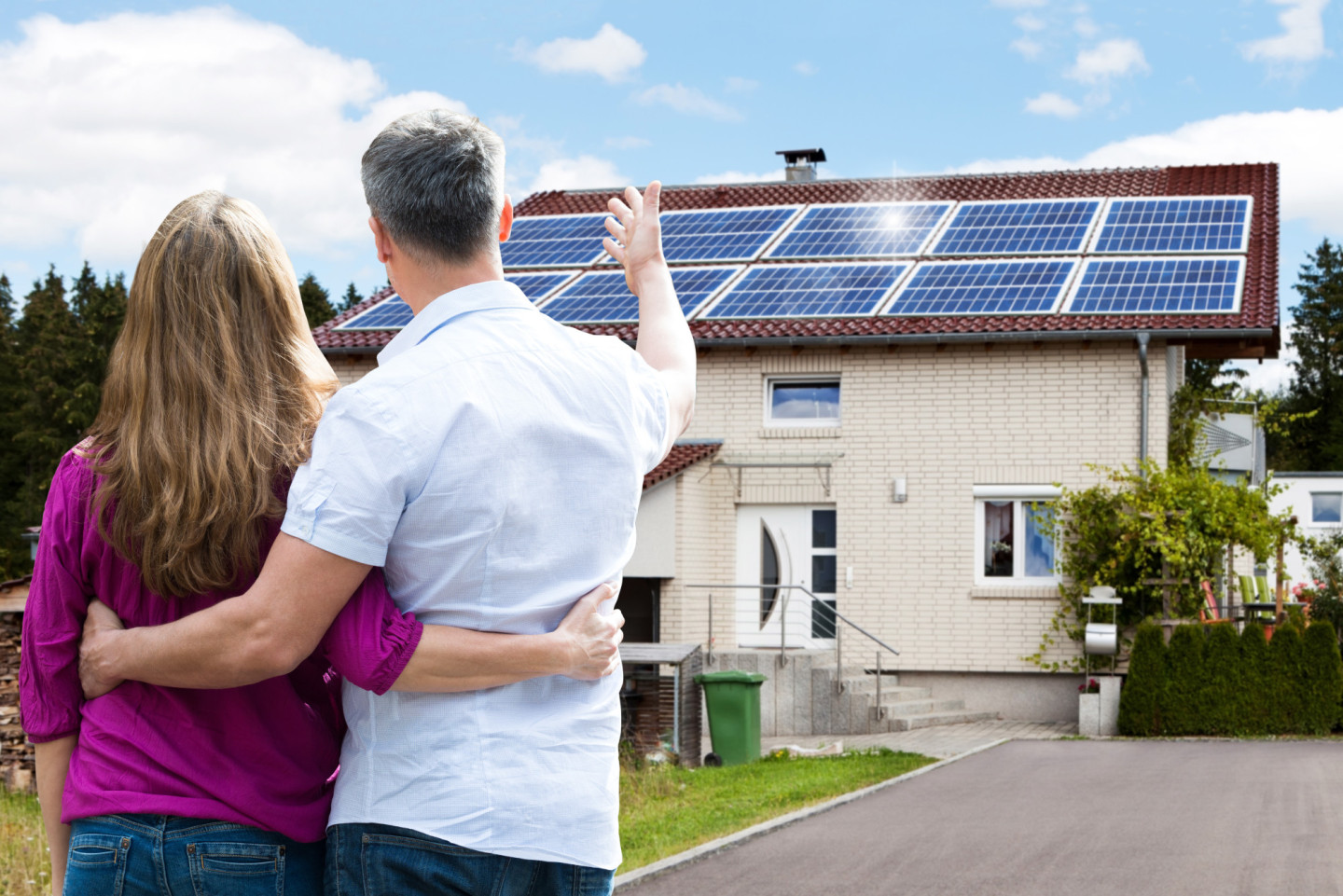
 

Speaking of solar power consultants, Emerald Sun Energy is your one-stop shop to cater to all your requirements concerning the purchase, installation, and maintenance of solar panels. We understand the urgency to shift our focus on solar energy, which is why our expert technicians dedicatedly provide seamless services throughout your solar journey with us. Reach out to us today to book your appointment, or call us now to know more!

Solar Panel Installation

Solar Panel Installation: What to Expect

Even as the 17-year price drop of solar panels came to an end in 2021, it's still time to jump on these energy savers before federal tax incentives fall away forever.

All across the country, Americans are turning to rooftop or yard solar panel installation to reduce their electric bills. In some cases, in sunshine states where net metering is enforced, some homeowners are coming away with hefty credits.

Furthermore, solar technology has improved in efficiency and cost over the years. The panels are thinner, lighter, and generate more energy.

So, now that you've decided on a solar panel home installation, you're asking: What can I expect to happen next?

That depends on several factors. With none more important than the solar panel installation companies you're considering and the shape of your roof. In the following article, we'll examine how to install solar panels and what you can expect next.

Buy, Don't Lease

A solar panel installation is likely to increase the value of your home by about 3.5%. The U.S. Department of Energy also found that solar panels added about $15,000 to the value of your home.  But these figures on based on owning the system outright.

If you lease the panels, you may reap some short-term financial gain, but you'll likely have to make accommodations with the solar contractor for the 20- to 30-year term of the lease.

This can include arranging for repairs and removal due to roof issues and ensuring that a technician is available to check that the system is working properly.

In most cases, the solar provider has no problem letting a potential buyer take over your lease. They'll just need to meet the minimum credit requirements. However, anyone buying your home might balk at getting into a contract that could stretch longer than the life of your roof.

Credits Are Important

If it is at all possible, consider finding the estimated $40,000 either in cash or through a home improvement loan to buy the system outright. If you play your cards right, you'll likely only pay $12,000 out of pocket for the installation after tax incentives.

Worst of all, with a lease, you won't enjoy the lowest price of energy available from the panels, and the term of the lease could change, leading to higher costs later on.

Check Your Roof Before Solar Panel Installation

When eyeballing your roof before installing solar panels, try to calculate how much life your roof has left in it. As a rule of thumb, if you replaced your roof within the last 10 years or have 10 years or more of life left in it, go ahead with the solar installation without hesitation.

If you don't know or can't tell how much life is left in your shingles and roof, then consult either a roofer or your prospective solar installer.

This is a serious consideration since a roof replacement can cost close to $10,000 on average.

Then take a look at the shape, slopes, and direction your roof faces. You'll need about 200 square feet for a suitable solar panel system. Also, you'll want to have a moderate pitch so that the panels collect the maximum amount of sun. Ideally, you'd like your home to face south or west to maximize your exposure to the sun.

Lastly, you need to make certain that your roof can handle the additional weight. Again, a certified panel installer can help you determine the proper load-bearing requirements.

What Are Your Power Requirements?

After you've examined the limitations of your roof, if there are any, you should estimate your system requirements.

To do this, you should identify your annual energy usage by looking at your utility bill. Then calculate how many hours of sunlight you can expect where you live. When you have these numbers, compare them to the total output of the system you are looking to purchase.

How Do You Connect to the Grid?

The power that your new photovoltaic cells produce is direct current, or DC power. To turn that power into usable energy for your home, you'll need to convert that power into alternating current or AC.

This conversion used to take place with a standard inverter box, but now most panels come with individual inverters. In many cases, this power is then sent through a battery to store some of the power and then into a meter and back into the power grid.

Expect to have some equipment installed near your meter and fuse box that power can move from the panels to your home and onto the grid.

Get the Correct Approvals

Before you set up your appointment with your panel installer, make sure you are aware of any local ordinances. For example, many subdivisions and condominiums have rules about if and when solar panels can be installed and how many.

A good rule of thumb is that if you are paying HOA fees, you need to check with the association about any solar panel ordinances.

Insist on a Final Inspection

Before the solar panel installer walks off the grounds and on to the next job, ask them for a complete tour of the system and allow them to help you inspect the panels on top of your roof.

Even if you are unfamiliar with the equipment, you'll be able to inspect the wiring and your roof. If you have any concerns, make sure you raise them when the contractor is on the job site.

Solar Panel Maintenance

Now that the panels are up, make sure you know how to maintain them properly. This will help the panels retain their value and help you get the most out of their energy-producing capability.

In general, you should clean your panels twice a year. To do this, spray them down with clean water and give them a gentle brushing with a light solution of soap and water. When you feel you've removed any dirt and build-up, rinse them off with more clean water.

Watch the Meter Spin Backward

Now that your solar panel installation is finished, you can enjoy the power of the sun and watch that credit from the power company grow.

In many parts of the country, you can save anywhere from $400 to $3,500 yearly, depending on the number of sunny days you receive and the price of your current energy bills.

Are you ready to go solar? Contact us today to talk to start your estimate.

solar energy Oralndo

Why Should I Switch To Solar Energy?

It is estimated that at least one in seven homes in the United States will have solar panels by the year 2030. With the costs of panels decreasing and more people trying to be green, they are becoming steadily more popular. But what are the main advantages of using solar energy? And why should you consider using Emerald Sun Energy for your solar panel installation?

Keep reading to find out!

Help Out the Environment

Of the many benefits of solar energy, surely one of the most persuasive is the effect on the environment. Installing solar panels in your home is one of the best ways an individual can be environmentally friendly.

Swapping to renewable energy reduces your carbon footprint. Unlike coal, oil, and gas, the sun is renewable - its power isn't going away any time soon! What's more, there are no polluting steps in the energy production process. This means you're helping communities and ecosystems around the world.

Choosing solar power is a great way to sustain the earth's resources and ensure a safe planet for future generations.

Save on Electricity Bills

One of the biggest benefits of going solar is the reduction in electricity bills. With a big enough solar system installed, your electricity bills could effectively be reduced to zero. Most homeowners make savings worth the costs of their solar panel installation within eight years, at which point your energy is free!

Depending on where you live and how much energy you use, 20 to 30 solar panels are enough to completely replace your monthly electricity bill. For people living in sunny areas of the country like Florida, switching to solar power is a no-brainer.

While one of the cons of solar energy is the upfront cost of the panels, this is easily mitigated by incentive schemes and the value added to your home, as we'll cover in this article.

Incentive Schemes Available

When looking for solar energy companies, make sure you choose one which offers a financial incentive scheme. This is yet another great reason to choose solar power.

We offer multiple financing options at Emerald Sun Energy, as despite the long-term savings, we understand that the initial costs can be challenging for some households. One such incentive is $0 down financing with no sales tax.

For more details on how to get the best deal on your solar financing, click here. You can also reach out to our team who will be happy to help answer your questions.

Solar Panels Are Easily Maintained

If you're looking for an additional reason to go for solar energy, it's helpful to know that the panels are easily maintained. After the initial purchase, there are very few costs involved with solar panel upkeep.

Solar panels can benefit from an annual service and occasional cleaning but are typically very reliable. Make sure that a solar production guarantee is included when purchasing your panels. At Emerald Sun Energy, we guarantee that your solar panel system will produce a minimum of kWh (kilowatt-hours) per year. If it doesn't, we'll refund you the difference!

This guarantee allows for peace of mind about the efficiency of your solar power system.

Sell Power Back to the Grid

Next, switching to solar energy gives homeowners the opportunity to see their excess power back to the grid. Solar systems are connected to the mains electricity. This means that when more solar energy is generated than necessary, it can be sold at premium rates back to the energy supplier.

Often, this provides a valuable income that can be set off against energy bills. It is yet another way that solar panels enable people to make long-term savings. Different energy suppliers offer different sell-back schemes, so make sure you shop around when looking for the best deal alongside your solar panels.

If you have any further questions about this potentially lucrative source of income, our team is more than happy to answer your questions!

Gain Electrical Independence

Another reason to choose solar energy is to avoid the fluctuating prices of traditional electricity costs. Solar energy is a very stable market, especially in comparison to gas, oil, and coal.

The cost of these fossil fuels has been rising steadily for years. The growing difficulties in sourcing these finite materials means that costs will likely continue to increase.

Solar energy also means you don't have to be dependent upon power grids that can lose energy during storms. Residents in several states were affected by the raging storm in Texas in February 2021.

The solar energy system means that you no longer need to rely on a utility company, and you are no longer subject to their volatile prices.

Increase the Value of Your Home

Finally, one of the most significant pros of solar energy is that it adds value to your home. Some people might be wondering if it's worth investing in solar panels for a home that they might not stay in beyond five or ten years.

But, it's worth recognizing that solar panels increase the value of a property, often beyond the installation costs of solar panels. This would make switching to solar energy worth it, even if you moved home next year!

Buyers in today's market consider solar panels as an important home upgrade equivalent to a renovated basement or brand new kitchen. People are willing to pay more upfront, knowing that they will save hundreds if not thousands in energy bills year on year.

That's Why Solar Energy Is a Great Option

We've now seen how solar energy offers advantages on many different fronts: both economically and environmentally. It's time to make a long-term investment that will help your finances as well as the planet, by switching to solar energy.

For more information about our solar panel services at Emerald Sun Energy, or about our financial incentives, get in touch today.

what-is-solar-inverter

What Is a Solar Inverter and You Do You Need?

If you're considering solar power, you might find yourself asking yourself "what is a solar inverter?". Well, you're in the right place to find the answer.

In essence, a solar inverter is a device that helps alter your electricity current for mainstream use. But that's not all it does. 

In this article, we will cover everything you need to know about solar inverters. So that you can decide if you would like for your own solar system.

Whenever you're ready to acquaint yourself with the power of a solar inverter, keep reading.

What Is Solar Inverter?

A solar inverter is defined as a type of electrical device that modulates the dysregulated direct current output of a solar panel into alternating current. This type of currency can be subject to use for various applications, such as an off-grid network for electricity.

In PV systems, a solar inverter is a balance of a system that allows the use of normal alternating current devices. These inverters very variable functions, starting with the prevention of anti-islanding and power point tracking.

If you're using a solar system as part of your home, the installation and selection of the device are very important. The principle by which a solar panel inverter works was already mentioned. 

The power generated will range anywhere from 240V to 600V. This conversion is done via insulated gate bipolar transistors in most cases. When the solid-state entry of these devices is in H-bridge form, it oscillates the current from DC to AC.

A step-up transformer is usually used so that AC power feeds to the grid after the acquisition. A few entities have started to employ inverters without a transformer, which can prove to be more efficient when compared against transformer-equipped inverters.

In all solar edge inverters, a programmable microcontroller is used to push various function algorithms with precise predictability. The controller improves the output power from teh panel via maximum power point tracking.

A step-up transformer is employed so that the AC power can be subject to acquisition and feeding to the grid. A few designers have started designing inverters without a transformer which has high efficiency as compared with the inverters which have a transformer.

Now that you know what is a solar inverter, let's examine the various existing types of technologies used in them.

The Solar Inverter Types

Solar inverters fit into classifications of various kinds. There's no preset standardized type of solar inverter that is a one-size-fits-all solution to all solar setups.

String Inverter

A string inverter is subject to form as a string, where many other strings are jointed to a single inverter. Each string has DC power and modulates into AC power.

Based on the size of the setup, you might have several string inverters with each string getting DC from other strings. These inverters are great for setups in which panels are installed on the same plane facing the same direction.

String inverters are also used with power optimizers, as well as each solar panel. Manufacturers of panels use these technologies and sell them as a single solution, known as a smart module. 

Power optimizers are beneficial just like microinverters, but they don't cost as much. 

Central Inverters

Central inverters are relevant to string inverters, but they are larger and support a greater number of strings. Rather than having the string open, the strings are joined in a single box so the DC power runs into the inverter where it is transformed.

The inverters needles of the component connections will need a combiner box and pad that is suitable for large installations on production arrays. The range of central inverters goes from MWs to many KWs. They can handle up to 500kW in the area.

These inverters are not used for homes, but they are more common in utility-scale solar farms and commercial projects.

Microinverters

Microinverters are great for residential and commercial projects alike. Just like power optimizers, these are module-level technologies. Hence, each inverter is installed on each panel.

Microinverters transmute DC to AC at the panel, so there is no need for a string inverter. Due to panel-level conversion, if the panel performance is shaded, the residual panels are not exposed.

The inverters will monitor the single panel function. This is unlike a string inverter in which the act of each string is necessary for good panel installation. By using microinverters, lots of benefits come from solar optimization. 

Battery Inverters

Battery inverters are getting quite common now. These have a battery charger and inverter, they are unidirectional. The operation of these inverters is subject to assistance with a battery. 

The inverters are grid-interactive, grid-tied, and off-grid. The primary benefit of such inverters is that they give a continual function for critical power loads of the grid. 

In all cases, the inverters handle the power between the array and grid while simultaneously charging the batteries. They also monitor the battery status and regulate how the battery charges.

Hybrid Inverter

The hybrid inverter is a multi-mode inverter, it allows the use of batteries as part of the solar power system. It provides an interface for the battery via DC coupling. 

Electronics in this inverter manage the discharge and charge of the battery.

Pros & Cons Of A Solar Inverter

There are many benefits to having a solar inverter as part of your solar power system. Some people would beg to say it's an essential part of any solar system. But there are also some drawbacks to using a solar inverter.

Advantages

With the use of a solar inverter, the energy depletes the greenhouse effect. With solar products, you also save money on utility bills. 

The solar inverter helps your solar system be reliable for electronic use via DC to AC transmutation. The inverters are great for businesses that want to reduce their energy needs. 

Inverters are multifunctional with many functions for large energy consumers who want to optimize costs. Inverters are easily maintained and they work very well with regular maintenance.

Disadvantages of Solar Inverter
The primary disadvantage to using a solar inverter is that it can be expensive for many people. Sunlight is a necessary part of electricity efficiency, without it the inverters are useless.

Inverters often require lots of free space for safe installation. Some inverters also require a battery for night-time functionality, which can be problematic for some people.

Solar Solutions for You

Now that you know what is a solar inverter, you are that much closer to deciding if you would like to have one as part of your system. However, some of you might not even have a solar setup yet. 

If that's the case and you're interested in installing solar for your business or home, get in touch with us and we will happily accommodate your needs.

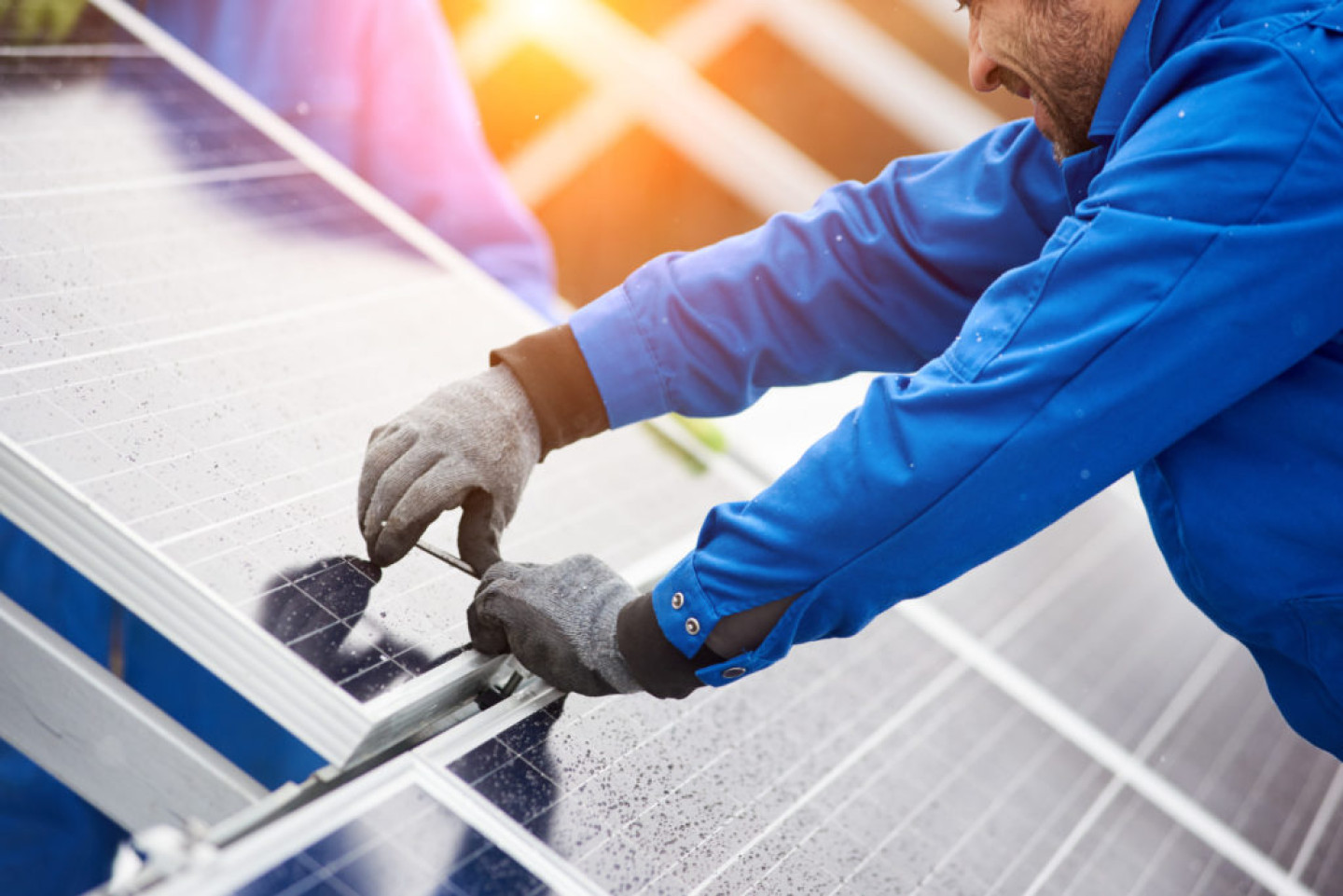
Smiling male technician in blue suit installing photovoltaic blue solar modules with screw. Man electrician panel sun sustainable resources renewable energy source alternative innovation

8 Questions You Should Ask Your Solar Company

Thinking of going solar? If so, you’ll want to make sure that your solar company of choice understands your priorities.

See, a lot of solar sales teams cover the same ground during their pitch. They’ll tell you how solar panels work, why they save you money, and how renewable energy is great. What they often neglect to mention is whether solar is right for you at all.

Yes, solar can save you money. However, can your solar provider guarantee to install your system the right way? If they can’t, there’s a chance you’ll have to replace the entire system if it breaks. Most reputable companies won’t try to fix another company’s mistakes.

Not sure what to ask your solar provider? These eight simple questions will help you find the right crew for the job.

1. Why Do You Charge Less Than Your Competitors?

While you’re researching solar companies, you’re bound to see some lower bids. This can be an indicator of a good deal, but it can also be a red flag.

The truth is, there are plenty of factors that influence the cost. Maybe it’s the products they’re using. Maybe they don’t offer a warranty. Maybe their price comes down to their low overhead and company size.

If you notice a deal that seems too good to be true, there’s almost always a reason for it. When it comes to solar, you tend to get what you pay for. The price tag alone will never tell you the entire story—do your due diligence and research further.

2. Do You Offer a Warranty?

Solar is a big enough purchase that you want to be sure you’re making the right choice. If you’re buying a high-quality product, it should come with a warranty. The company should be confident enough to back up its craftsmanship as well.

This is another area where it’s important to look into specifics. For example, you should ask the solar company what is and isn’t covered by their warranty. You should also inquire about the process for repairs done outside of the warranty.

3. Do You Use Google Earth for Sizing Your Systems?

Google Earth is a helpful tool, but it can be out of date. For instance, it may not capture the recent renovations you’ve done on your home. If there are any trees around the house, they may have grown a lot within the last five years.

If the solar company relies on Google Earth to size the systems, their quote might be inaccurate. This can lead to design or price changes down the line. The best way to receive an accurate quote is to work with real measurements of your property.

4. Do You Subcontract?

If a solar provider doesn’t subcontract, their installer team will have better collaboration with the sales team. Plus, your salesperson is more likely to know how the installation process works. This allows them to see issues with the design before they come up.

The above benefits translate into a more seamless experience for the customer. You don’t get that with a subcontracted crew. If a company subcontracts work, they won’t control its safety, quality, and insurance.

5. Are You and Your Employees Insured?

If the answer is no, you should start looking elsewhere. When it comes to construction, insurance and workers’ compensation is essential.

In these situations, it’s important to consider the worst-case scenario. Let’s say an installer slips off your roof and gets gravely injured. If the company has insurance, the worker’s family will go straight after them.

If the company isn’t insured, this kind of incident could make them go under. This stops you from taking advantage of any kind of workmanship warranty you might have had. What’s more, the worker’s family could now press charges against you.

6. Can You Provide References?

Testimonials remain the best way to gain insight into a company. The more reviews a company provides, the better their brand loyalty looks.

Of course, you should always do your own research. One thing to pay attention to is how similar the reviews look. If everyone says that the company was professional, you should be more inclined to trust them.

The number of ratings and reviews matters as well. Two 5-star reviews are nice, but 30 4-star reviews are a more reliable indicator of quality. Look for reviews from recent customers—if all the reviews are old, the company may not be on top of its game anymore.

7. How Often Do You Run Into Issues After Installation?

Every experienced solar provider has encountered problems of some kind. The important thing is how they deal with them. Find out how they handle service calls, what kind of problems they run into, and how do they go about fixing them.

If you get the sense that they keep replacing faulty panels or patching up leaky roofs, dig further. Is this an industry-wide problem? What are they doing to avoid these issues in the future? If you get several quotes, compare their answers to these questions.

8. Who Is Your Lending Partner?

No, a solar company can’t set the terms of your loan. That said, what they can do is pick a lending partner that has your best interests at heart. Every solar company with enough experience can recognize a good deal.

This is why you should ask your solar provider how they picked one lender over another. They should be able to make their case by pointing out certain pitfalls or tricky terms most loans come with. If they can’t do that, you may want to look into other options.

More on Choosing a Solar Company

Going solar should be a wonderful experience, not a headache. By asking these questions, you can all but ensure that the process goes smoothly.

One final tip: look into the company’s install crew turnover. As a rule of thumb, low turnover translates to more experience. This is a good way to guarantee better workmanship and fewer issues in the future.

Interested in learning more about the many benefits of solar energy? Looking for a solar company that can efficiently meet your solar needs? Contact us today—we’ll get back to you as soon as possible!

Solar Panel Array 01

Going Solar in 2021: A Homeowner’s Guide to the Benefits of Solar Power

The planet is warming up and we are all responsible for doing our bit towards reducing the damaging effects of climate change. While governments and big businesses all have their part to play in minimizing the climate crisis, changing the tide starts at home for many of us.

One of the best ways that you can help the environment is by looking at the way that you consume electricity. Converting your home to use solar power is one step that everyone can take to reduce their carbon footprint.

But, what are the benefits of solar power?

In this article, we’ll discuss the advantages of solar power and why you should have solar panels fitted to your home.

You’ll Cut Your Energy Bills

One of the best solar power benefits besides environmental concerns is that you can generate your own electricity for free.

If you live in an area that gets plenty of all-year-round sunlight, you’ll be well equipped to fight climate change and to save yourself money.

All of this means that you will get free energy from an abundant source; the sun.

If you’re not in an area that gives you lots of sunlight, there are ways of storing the power that you get on the brighter days so that you can power your home when it’s not so sunny.

You will of course have to get solar panels in the first place, however, there may be grants and financing deals that you may be eligible for to help you manage the costs.

Get in touch with the best solar power company and find out about the different financing options.

Solar Panels Add Value to Your Home

If you are planning on selling your home anytime soon, you will be able to add value to your property by adding solar panels.

Solar panels can be quite an expense to have fitted in the first place, however, there are innumerable long term financial benefits.

If your home is already set up to run from solar power, this will be very appealing to many homebuyers who will happily pay the extra for the property so that they don’t have to worry about their energy bills in the future.

You’ll Do Your Bit to Reduce Air Pollution

It’s no secret that burning fossil fuels produces a lot of air pollution. If you’re getting your power from the grid, then there is a strong chance that you’ll be directly benefiting from the burning of fossil fuels.

Because solar panels produce no air pollution whatsoever, you’ll be doing your bit to reduce the amount of pollution caused by big energy companies that are reliant on fossil fuels.

You’ll Get Energy Independence

If you are not connected to the grid, then you won’t have to worry about paying another cent on your electricity bill again.

In addition to saving money on your home’s electricity bills, one of the other advantages that come from not being connected to the grid is that if there is a national or local power cut, your lights will remain on.

Because you create your own power, you’ll be free from the grid and you can keep on living your life without interruption.

Your Home’s Carbon Footprint Will Improve

Did you know that through its energy consumption, the average home produces a staggering fifty tonnes of C02 waste each year?

One of the major benefits of having solar panels fitted to your property is that it will reduce your carbon footprint.

By switching to a carbon-neutral source of power, you’ll be making sure that the fifty tonnes of C02 won’t be let out into the atmosphere.

The more homes that reduce their carbon footprint in this way and become self-sufficient and carbon neutral, the better.

You’ll Help Conserve Water

Did you know that fresh drinking water is in scarce supply? Many countries are struggling to get fresh water, and yet every day thousands of liters are used in energy production.

Both nuclear and fossil fuel power stations rely on water to help in the cooling process, while the much cleaner hydro-energy is reliant on water too.

Solar panels require no water whatsoever and are therefore helpful in conserving water.

Solar Panels are Low Maintenance

Once you’ve got solar panels fitted onto your roof, there is not really very much that you will ever need to do with them to maintain them.

Get your solar panels fitted by a professional solar panel company and you’ll not need to worry about anything going wrong with them.

As there are no moving parts, there is no need to have your solar panels checked over by an engineer. They’ll just keep on catching the sun and producing power.

Solar Panels are a Great Long-Term Investment

Although there is an initial outlay associated with having solar panels fitted, they are in fact a very astute long-term investment.

Stop and consider how much you spend on your energy bills each year. Now think about how much money you’d save over your lifetime if you don’t even need to pay that.

When you have solar panels fitted, you’ll constantly save money on your electricity bills. You will be surprised at how quickly the savings will rack up and before you know it. your solar panels will have paid for themselves several times over.

Reap the Benefits of Solar Power

If you like what you have read in this article, and would like to reap the benefits of solar power while doing your bit to change the tide on the climate crisis, then take action now by getting solar panels.

Get in touch today to find out how Emerald Sun Energy can help you.

How to get the best deal on Solar Financing

These Tips will Make your Solar Experience Even more profitable

Understanding your Solar Financing Options:

Understanding you solar financing options is usually one of the biggest indices that will give you the biggest return on investment.

A beautiful thing going on in the Solar Industry right now is that you can get solar for – No Money Down & No Money Out of Pocket!  It is true but it often creates confusion in the buyer’s mind so it is important to understand it.  The confusion is that sometimes people believe that the solar energy system is free, it is not.  What is being implied in the above statement is that you will be able to use the money you are already spending to fund the purchase because the financing options do not require any money down.  So the money you will save on your power bill will be more than the money you will have to pay to finance the system.  I go into much more details in my article “Can I really get Solar for $0 Down and $0 out of pocket”.

The next thing to understand when it comes to your solar financing is what your monthly payments will be vs the duration of the loan.  What this means the more your monthly payment for the solar panel system will be the shorter the duration that you will have to pay on the loan.  In most cases you can have a monthly payment lower than the amount of money that you will save on your power bill with a 12 financing option or 144 payments.  Since your solar panel system hence a performance guarantee of 25 years you will be getting 13 years of energy offset on your power bill which will accumulate to huge savings.  That does not factor in the savings you will receive from being insulated from the power companies rate increases which averages 4% per year.  That means you will make an additional 4% compounded every year even while you are paying for the system.

You can save money immediately if you choose a 20 year payment plan instead.  In this option you will save anywhere from $40 – $80 per month depending on the size of the Solar Panel System you install.  You would still see an increased saving of 4% a year as well while making money from day 1.  If it is $50 per month that is a cash savings of $600 in year one and in year 2 that would jump to $624.  However, you will have to make payments for an additional 8 years but the payments will represent a larger portion of your power bill.  The additional 8 years will cost you more in interest because of the additional 96 payments and most of the 20 year options are also at a slightly higher interest rate.

It really comes down to what your main financial goal in regards to going solar.  If you are looking for the most return on investment then the 12 year option will give you that because you will be making higher payments (still less than you pay the power company) with a lower interest rate hence lowering your overall actual cost of the system when compared to the 20 year option.  The 20 year option often makes sense for people who are on a fixed income and want to lower their overall monthly expenses.  So you make less overall but you make more now.

There are many great financing options available today to purchase a solar power system for your home.  There are some sub-prime rates available, what that means is if prime is 5%(like it is now) and we are able to offer you a rate of 2.99 then that would be a subprime rate.  Our current 12 year option available is at a 2.99 subprime rate.  It is great but it does come with a 17% financing charge that is added to the initial cost of the solar panel system.  At first look you would say NO WAY!  However it winds up being the cheapest solution in the long run and will generate the greatest return on investment other than paying for the system in cash.  We have a 20 year available with no financing charges at a 6.95%.  So you do not pay more for the system but you will pay a 6.95% interest rate for 20 years.

Now we need to understand what the true cost of the solar panel system is vs the retail cost of the system.  The retail cost of the system would be the price of the system with any added in financing charges.  The true cost of the system is what you will actually pay for the system.  To figure that out you will take your monthly payment at multiply it by the number of payments required to fulfil the loan.  If we look at an example of a 12 year 2.99% system that generates $225 a month of electricity.  Your monthly payment would start at $220 per month and when you multiply it by 144 (12 years) your true system cost is $31,680.  Keep in mind that this option also included the 17% financing charge.  Let’s take a look at the 20 year 6.95% (with NO Financing Charges added in) system that generates $225 a month of electricity.  Your monthly payments would be $168 per month and when you multiply it by 240 (20 years) your true system cost is $40,320.  So the system that had 17% added to the cost saved the customer a total of $8,640.  What that means is the subprime rate is a more important variable then the cost of the system.  That is an additional $8,640 you can calculate into your return on investment.

You are also able to secure your own financing through a home equity loan.  The benefit of that is you can write off the interest that you pay on the loan.  You might have a hard time getting a subprime rate but you may be able to get prime (5% in the above example).  That combination may save you similar about of money as the subprime rate.

Checking to see if PACE is available in your area may be another option to consider.  PACE (property assessed clean energy)  allows you to use your property tax to pay for the Solar Panel system.  You can spread the cost out over 25 years and pay it through your property tax.  This option is only available in certain communities in the Orlando and Florida area.  If it is available it will look at the equity that you have in the property as the main qualifier.  Hence if you have poor credit this is a great option because it is not dependent on your credit score but it has limited availability.  It is also transferable to the new homeowner which means you can get the additional value in your home and not have any other financing options to pay for it.

Retirees have an additional option available, they can look at a hecm loan or reverse mortgage.  I like this option for seniors who are looking to free up as much money as they can off of their monthly budgets.  With a Hecm loan they can use the equity in the home to purchase the system and then use the equity in the home to make the payments on the system.  Essentially freeing up the entire amount of money that they will be saving on the power bill into new dispensable income.

Case Study – Proves Solar Energy Works

Solar Before and After Comparison

Here is one of our happy solar energy customers power bills from February 2019 from here in Orlando Florida. As you can see he had a power bill of $190. On the right you can see that his power bill was reduced to $9.83 after solar energy installation in Orlando Florida. We compared February 2020 so it is from the same month to get direct comparison.

I-Pagan-Before

Power Bill from Duke Energy before Solar Installation in Orlando Florida

Ipagan-after

Customer reduced duke power bill after solar installation in Orlando Florida

If you look at the after bill you can see it highlighted in red that he received an additional 135 kWh credit for future usage, meaning he out produced what he would need ant the credit will be applied to future bills. In Florida this is an important strategy because in the winter months like February Orlando homeowners will produce more solar energy than they can use. These credits will be applied to months when they use more energy than they produce. Like June and July.

So you can see that you can destroy your power bill with solar Energy! Call Now and Start Saving!! Huge Tax incentives will end at the end of 2020!

Federal Solar Tax Credit Beyond 2019?…

Won’t be completely gone until 2022 but will be reduced!

2019 is the last year for the 30% Federal Tax Credit!  The tax credit allows you to write off 30% of the cost of your solar panel system from your annual Federal Income tax return.  An important distinction to understand is that tax credit if better than a tax deduction. A deduction lowers your annual income that is going to be taxed.  A Tax Credit goes against the amount of tax responsibility you have for the given year. It is dollar for dollar against what you owed or paid on your w2. Where a tax deduction you really only recognize a percentage of the reduction in actual dollars usually to the percentage of your tax bracket.  So if you are in a 25% tax bracket and you have a $4,000 deduction that will translate into a $1,000 of actual tax responsibility. Where with a tax credit, if it is $4,000 tax credit it will translate into a deduction $4,000 of your actual tax responsibility.

That makes this the absolute best year to incorporate solar into your energy portfolio.  However, if you have a circumstance that will preclude you from taking advantage of the Solar Tax Credit you will not be left out in the rain.  The Solar Tax Credit will have a two year deceleration period. In 2020 the Solar Federal Tax Credit will be lowered from 30% down to 26%. So it will still be a good deal but you will be leaving money on the table.  For example, If you purchased a solar panel system in 2019 for $28,000 your 30% tax credit will be $8,400 and your net system price will be $19,600. However, If you purchase the same system in 2020 for $28,000 your tax credit will be $7,280 and your net system cost will be $20,720.  So if you are able to make your purchase in 2019 you will save an additional $1,120.

The Federal Solar Tax Credit for 2021 will 22% which is an additional 4% reduction in the tax credit.  As for our above example, if you paid $28,000 your 30% Federal Tax Credit will be $6,160 and your net system cost will be $21,840.  Which means it will cost you $2,240 more than it would in 2019 and $1,120 more than it would in 2021. That is still a great deal when you consider if you wait until 2022 there will be no Residential Solar tax credit which means your $28,000 system will cost you $28,000 or $6,160 more than if you purchased the system in 2021.

Not to worry even without the tax credit solar is a tremendous value for long term energy savings over what you would have paid the power company without it.  As the Power Company as an industry raises there rates between 3-4% on average per year. Once you have solar you will have isolated yourself from those increases and essentially creating an annual return on investment that increases its yield be 3-4% a year.  However, taking advantage of the tax credit will allow you to make the most return on investment as you will not be leaving any money on the table.

For Commercial Businesses the Federal Tax Credit is a little different.  Like the residential tax credit in 2019, there will be a 30% Federal Tax Credit.  In 2020 just like the residential tax credit the commercial tax credit will be 26% and in 2021 it will be 22%.  However, in 2022 when the residential tax credit goes away the commercial tax credit will be 10%. There is no current expiration date for the 10% tax credit but that doesn’t mean it won’t go away on short notice.

The future for solar energy is bright!  Even as the sun begins to set on the 30% Federal Tax Credit the growth of solar is predicted to continue to be one of the fastest growing industries.  If you are considering solar energy then now will be the most profitable it will be so the time to act is now.

Why 2019 Is The Right Year To Buy Solar?

Spoiler: It WON’T be this good next year!

The 30% Federal Tax Credit which was initiated in 2006 is set to expire at the end of 2019.  The Tax Credit has been the biggest contributor to the Solar Boom we have experienced over the last decade and 2019 will be the biggest year for solar energy to date.  In this article, we will take a look at what the 30% Federal Tax Credit is, how it works and how you can take advantage of it.  We will also explore how rising electricity rates has made solar even more affordable and the financing options that are available that will allow you to use the money you already pay the power company to purchase your own system with no money down and no money out of pocket.  Lastly, we will give you an incorporated view on how all of these current solar trends can work for you. The 30% Federal Tax Credit allow Home or Business owners to claim 30% of the cost of there Solar Panel System or other energy efficient upgrades to your Federal Income Tax as a Credit.  A tax credit works differently than a tax deduction. A Tax Credit is much more valuable as it is a dollar for dollar reduction in tax responsibility as opposed to a deduction that would only represent the taxable portion of the amount being deducted.  Another important variable to consider in taking advantage of the 30% Federal Tax Credit is the tax credit is directly related to the amount of Federal Income Tax that you have paid if you are a W-2 Employee or the Amount of Income Tax that you owe.  Why that is important to understand is because if you do not pay or owe it you can not claim it. This sometimes will affect eligibility if you are on disability or if you are retired and only collecting Social Security.  However many seniors on Social Security still qualify for The tax credit if they also are collecting income from a pension, investments or other retirement funds that are not associated with their Social Security. Also, If you have paid less in Federal Income tax than what your 30% Federal Tax Credit is that will limit your tax credit to the amount of the Federal income tax that you paid for that year.  You are able to carry over any of your remaining Federal Tax Credit to the following year.  You actually have up to 5 years to claim your entire credit. Here is an example: Let’s say that you have paid $5000 in Federal Income Tax but your 30% Federal Tax Credit is $10,000.  You would be able to claim $5,000 of your tax credit for the current year and you would carry over a $5,000 Federal Tax Credit for the following year. 2019 is the last year that the 30% Federal Tax Credit will be available.  This has been a tremendous program that has helped millions of homeowners upgrade their homes with energy efficient Solar Energy.  It can represent an Income Tax Credit that is dollar for dollar cash savings on anywhere from $3,000 to over $20,000 and maybe more depending on the scope of the Solar Energy System you are considering.  With the 30% Federal Tax Credit expiring this year it is your last chance to get incredible additional savings added to an already affordable alternative to traditional energy. If you are considering Solar Energy now is the time. Getting Solar in 2019 and taking advantage of the 30% Federal Tax Credit will give you the opportunity to convert your expensive monthly power bill into an incredible investment that will increase the value of your home while reducing your energy cost all while using the money that you already spend.  The reason why this year makes Solar an incredible investment is really 3 factors. The First reason is you are paying more for electricity now than in 2006. The cost of your energy which the power company bills in kWh have gone up by over $3.00 a kWh since 2006 when the Federal Tax Credit took effect.  That means you are paying 35% more now when in 2006. Secondly, The price of solar energy has dropped by almost 3 times its cost from 2006. Solar energy is sold by the size of the system you need and the price is determined by taking the total number of watts required and multiplying it by the price per watt.  So if the price per watt in 2006 was over $8.00 per watt when the 30% Federal Tax Credit began, and today the price per watt has dropped below $3.00 per watt that over a 160% decrease in the cost of Solar Panel Systems. What this means is that in 2006 the 30% Federal Tax Credit was needed to justify the cost of the system an to help homeowners achieve a long term return on investment.  But with those changes today the 30% Federal Tax Credit will create an immediate Return on Investment. So much so that you will often be able to have the same rate or lower rate than what you are currently paying the power company and still be able to pocket the Federal Tax Credit in cash the following year. I do not know of any investment where you do not have to spend one dollar more than you already do for an expense and can cash out in less than a year for potentially over $10,000 in cash. The Future for Solar Energy is bright as energy costs continue to rise while the cost of solar has dropped to all-time lows.  The more the cost of energy rises the cheaper solar energy will become. I don’t know about you but I don’t see the power companies lowering there rates any time soon.  They will probably continue to raise them 3-4% per year which will simply be a built-in profit return every year you have solar. Because once you purchase solar you are fix rating you energy expense while you pay off the system and then you will have no Solar Panel System cost and a significantly reduced energy cost of up to 95% lower than your current expense.  So the future is bright. However,  with the tax credit, it is a once in a lifetime opportunity to create an instant return on investment without using any money that you don’t already spend.  Simply reallocating it and creating a great investment and return. If there are any extenuating circumstances that will not allow you to take advantage of the Federal Solar Tax Credit in 2019 do not fret as the Solar Tax Credit will be phased out over the next 3 years. In 2019 The Tax Credit will be 30% (The last year where it will be this high).  In 2020 The Federal Tax Credit will drop to 26% of the purchase price of your Solar Panel System. In 2021 The Federal Tax Credit will drop to 22% of the purchase price of the Solar System. In 2022 The Federal Tax Credit will no longer exist for residential homeowners. For Commercial Solar there will be an ongoing 10% Federal Tax Credit.

emerald-sun-energy-logo-600

Contact us

2151 Consulate Dr

Orlando, FL 32837

info@emeraldsunenergy.com

Office: (407) 504-0922

Florida Lic #CVC57145

Lic #EC13010058