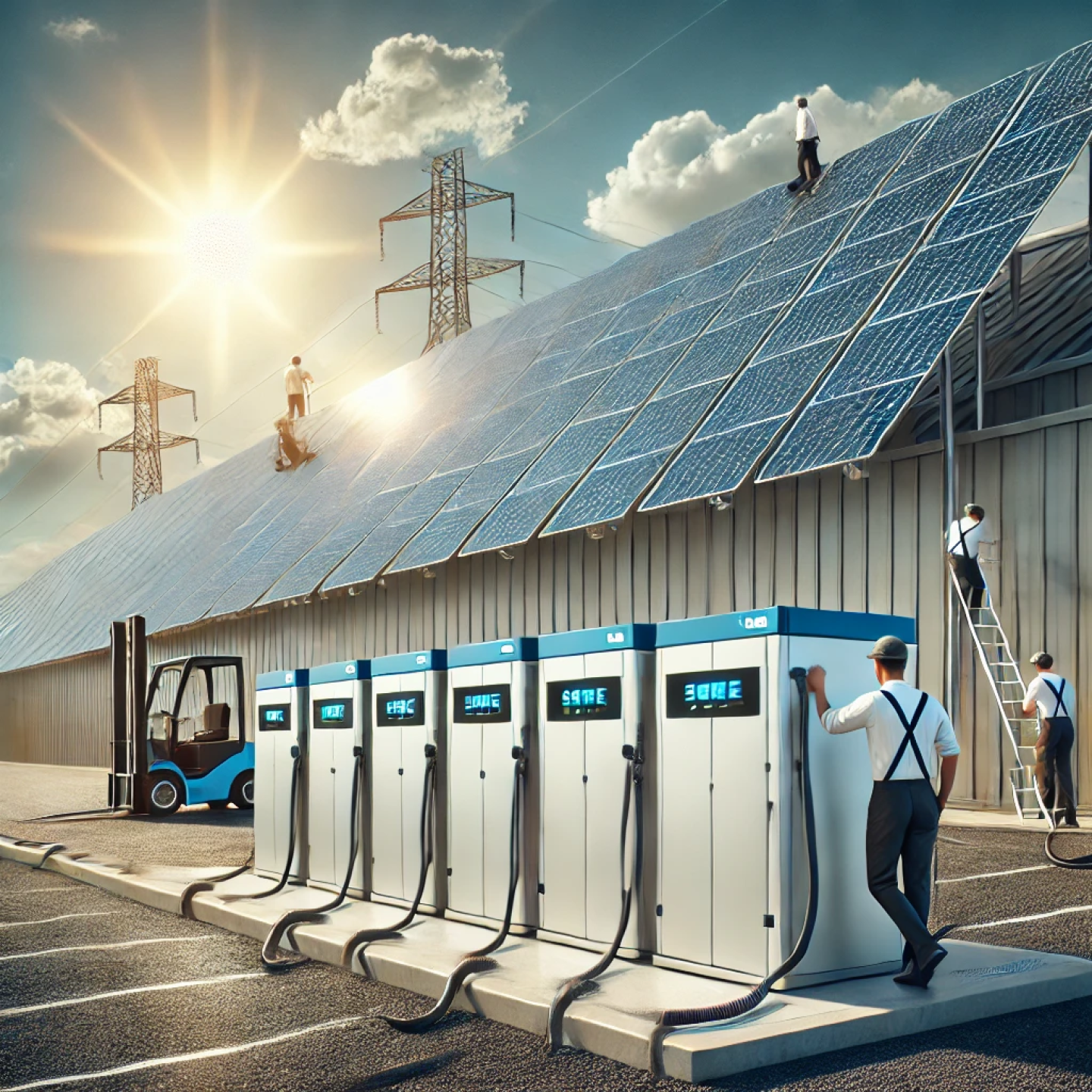
Super Chruch with Solar

Direct Pay Enables Churches and Non-Profits to Benefit From Solar Incentives

Understanding the Direct Pay Option Under the Inflation Reduction Act for Commercial Solar Projects

The Inflation Reduction Act (IRA) of 2022 introduces pivotal provisions designed to accelerate the adoption of clean energy technologies across the United States, with particular benefits for the commercial solar industry. Among these provisions, the Direct Pay option stands out as a transformative incentive for Commercial Solar Companies and Commercial Solar Contractors in Florida, offering a direct payment alternative to traditional tax credits. This article explores the steps, requirements, benefits, features, and future outlook of the Direct Pay option, emphasizing its impact on Commercial Solar Installations in Florida.

1. Overview of the Direct Pay Option for Commercial Solar

The Direct Pay option under the IRA allows tax-exempt entities such as state and local governments, tribal governments, not-for-profits, and rural electric cooperatives to benefit directly from federal clean energy incentives. Previously, these entities struggled to leverage tax credits due to their non-taxable status. Direct Pay simplifies this process by offering the value of the credits as direct payments. This shift is particularly advantageous for Commercial Solar Companies in Florida, making it easier to access federal incentives.

2. Eligibility and Steps for Utilizing Direct Pay in Commercial Solar

2.1 Eligibility Requirements

To leverage Direct Pay, Commercial Solar Contractors in Florida and other eligible entities must meet specific criteria:

  • The entity must be tax-exempt or have limited tax liability.
  • The project must involve renewable energy technologies such as solar, wind, or other specified clean energy solutions under the IRA.

2.2 Application Process

For Commercial Solar Installations, the application process involves:

  • Project Certification: The project must meet specific environmental and labor standards. Ensuring compliance is critical to qualify for Direct Pay.
  • Submission of IRS Forms: Entities must complete and submit relevant IRS forms detailing the project costs and expected credit amounts. Accuracy is essential, as any discrepancies may delay payment.
  • IRS Verification: The IRS may require additional documentation or conduct audits to verify the claims before disbursing payments. Entities should be prepared for potential reviews.

3. Conversion from Tax Credits to Direct Payments

3.1 Conversion Process

Entities initially planning to claim tax credits can choose to convert them to Direct Pay if eligible. The conversion process for Commercial Solar Installations involves:

  • Reassessment of Eligibility: Entities must confirm that both the project and the entity still meet the requirements under the Direct Pay provisions.
  • Adjusting Financial Projections: Financial models and projections may need to be revised to account for the immediate cash inflow from Direct Pay instead of deferred tax credits.
  • Coordination with Financial Institutions: If the project was initially financed based on tax credits, lenders and investors may need to adjust terms and expectations.

4. Benefits of Direct Pay for Commercial Solar Companies

4.1 Immediate Financial Impact

Direct Pay provides immediate liquidity, enhancing the financial feasibility of renewable energy projects for Commercial Solar Companies in Florida. The immediate access to funds allows for faster project initiation and smoother cash flow management.

4.2 Increased Project Viability

By converting tax credits into direct payments, more solar projects become financially viable. This is particularly beneficial for Commercial Solar Companies that previously struggled to fully benefit from tax credits due to limited tax liability.

4.3 Simplified Financial Planning

Direct payments simplify the accounting and financial planning for renewable projects, reducing the complexity associated with tax credit monetization. For many entities, the straightforward nature of Direct Pay is more appealing than navigating the complexities of traditional tax credits.

5. Features of the Direct Pay Option

5.1 Broad Applicability

Direct Pay applies to various renewable energy technologies, including solar, making it a versatile tool for clean energy deployment. Commercial Solar Companies in Florida can take advantage of this feature across multiple types of installations, from rooftop solar systems to large-scale solar farms.

5.2 No Cap on Payments

There is no cap on the amount of direct payments an eligible entity can receive, subject to the cost and scale of the eligible projects. This feature is particularly attractive to large-scale Commercial Solar Installations in Florida, where project costs can be substantial.

5.3 Compliance with Regulations

Entities must ensure compliance with all federal, state, and local regulations, including prevailing wage and apprenticeship requirements, to qualify for Direct Pay. This makes it crucial for Commercial Solar Contractors to be well-versed in labor standards and documentation.

6. Outlook and Future Implications for Solar Energy in Florida

6.1 Expansion of Renewable Projects

The Direct Pay option is expected to significantly expand the number and scale of renewable energy projects in the U.S., particularly benefiting the Commercial Solar Florida sector. As more tax-exempt entities embrace this option, the demand for solar installations is expected to rise sharply.

6.2 Policy Evolution

As the implementation of the IRA progresses, additional guidelines and refinements to the Direct Pay option may evolve. Commercial Solar Contractors in Florida should stay updated on new regulations and opportunities as they develop.

6.3 Economic Impact

The widespread adoption of Direct Pay is anticipated to stimulate local economies, create jobs in the clean energy sector, and contribute to energy independence and sustainability. The boost in Commercial Solar Installations will also drive technological advancements and cost reductions, benefiting businesses and communities alike.

Conclusion

The Direct Pay option under the Inflation Reduction Act represents a significant evolution in how renewable energy incentives are administered, providing direct economic benefits to a broader range of entities, including Commercial Solar Companies in Florida. As this policy tool is more widely adopted, its impact on the commercial solar landscape and its contribution to broader energy goals are expected to be profound and enduring.

References

  1. IRS Official Site - Direct Pay Guidance
  2. Energy.gov - Inflation Reduction Act Summary
  3. National Renewable Energy Laboratory - Direct Pay Analysis
  4. Environmental Law Institute - Overview of IRA Provisions
  5. Renewable Energy World - Direct Pay Impact on Projects


Commercial Solar Installation

Inflation Reduction Act: Commercial Solar Incentives in Florida

Inflation Reduction Act: Commercial Solar Incentives in Florida

Introduction

The Inflation Reduction Act (IRA), enacted in August 2022, is a pivotal piece of legislation aimed at addressing inflation, healthcare costs, and climate change. For businesses in Florida and beyond, the IRA offers extensive incentives specifically designed for commercial solar installations. This report delves into the features, benefits, and future outlook of these commercial solar incentives, with a focus on how they can benefit commercial solar companies and contractors in Florida.

1. Overview of the Inflation Reduction Act

The Inflation Reduction Act is a comprehensive legislative effort to promote renewable energy, including commercial solar power. The Act is designed to incentivize the adoption of clean energy technologies, reduce carbon emissions, and create sustainable economic opportunities. For commercial solar companies in Florida, the IRA presents a unique opportunity to expand their offerings, increase customer satisfaction, and contribute to a greener economy.

2. Key Features of Commercial Solar Incentives Under the IRA

2.1 Investment Tax Credit (ITC)

The IRA extends the Investment Tax Credit (ITC) at a full 30% for commercial solar installations. This extension is a significant boon for commercial solar companies in Florida, providing a compelling financial incentive for businesses to invest in solar power.

  • Eligibility: The ITC is available for commercial solar installations across Florida, including rooftop systems, ground-mounted systems, and solar carports.
  • Bonus Credit: Additional credits are available for projects that meet specific labor standards or are located in low-income or energy-dependent communities. This can increase the ITC to 40-50%, offering even greater savings for businesses.
2.2 Production Tax Credit (PTC)

The IRA also reintroduces the Production Tax Credit (PTC) for solar energy projects, traditionally applied to wind energy. This allows commercial solar companies in Florida to offer customers an additional incentive based on the energy produced by their solar installations.

  • Rate: The PTC offers up to 2.75 cents per kilowatt-hour (kWh) for electricity generated, making it a valuable option for commercial solar projects.
  • Flexibility: Commercial solar contractors can help clients choose between the ITC and PTC to maximize their financial returns.
2.3 Direct Pay Option

The Direct Pay option under the IRA is a game-changer for non-profit organizations, government entities, and other tax-exempt entities in Florida. This feature allows these entities to receive the ITC or PTC as a direct cash payment, rather than a tax credit.

  • Eligibility: This is particularly beneficial for educational institutions, municipalities, and non-profits in Florida, making solar investments more accessible.
  • Benefit: Direct Pay provides immediate financial benefits, encouraging more widespread adoption of commercial solar installations.
2.4 Depreciation Benefits (MACRS)

The Modified Accelerated Cost Recovery System (MACRS) allows businesses to recover the cost of solar investments through accelerated depreciation. This is a significant advantage for commercial solar companies in Florida, as it enhances the financial viability of solar projects.

  • Bonus Depreciation: The IRA extends bonus depreciation, enabling businesses to deduct a substantial portion of the solar system’s cost in the first year, reducing their overall tax liability.
2.5 Energy Storage Incentives

The inclusion of energy storage systems as eligible for the ITC is a critical development under the IRA. For commercial solar companies in Florida, this opens new opportunities to offer comprehensive energy solutions.

  • Stand-Alone Storage: The ITC now covers stand-alone energy storage systems, allowing businesses to retrofit existing solar installations or add storage systems independently.
  • Financial Benefits: By combining energy storage with solar installations, businesses can optimize energy use, reduce peak demand charges, and improve energy resilience.

3. Benefits of Commercial Solar Incentives

3.1 Financial Savings and Return on Investment (ROI)

The IRA’s incentives substantially improve the ROI for commercial solar installations in Florida. The combination of ITC, PTC, Direct Pay, and MACRS helps reduce upfront costs and enhance long-term savings.

  • Lower Upfront Costs: Commercial solar contractors can offer more competitive pricing, making solar installations more attractive to Florida businesses.
  • Long-Term Savings: Businesses can achieve significant reductions in energy costs, providing a strong financial case for investing in commercial solar power.
3.2 Energy Independence and Resilience

By investing in commercial solar installations, Florida businesses can achieve greater energy independence and resilience. The IRA’s incentives make this transition more affordable and accessible.

  • Energy Resilience: Solar installations with integrated energy storage provide reliable power during grid outages, enhancing operational continuity for businesses.
  • Predictable Energy Costs: Solar power stabilizes energy costs, protecting businesses from volatile utility rates and fuel prices.
3.3 Environmental and Corporate Responsibility

Adopting solar energy aligns with corporate social responsibility (CSR) goals and demonstrates a commitment to sustainability. Commercial solar companies in Florida can help businesses reduce their carbon footprint and enhance their brand reputation.

  • Reduced Carbon Emissions: Solar energy contributes to significant reductions in greenhouse gas emissions, supporting Florida's environmental goals.
  • Enhanced CSR Profile: Businesses that adopt solar power can improve their public image and attract environmentally conscious customers.
3.4 Job Creation and Economic Growth

The expansion of commercial solar in Florida will drive job creation and economic growth. The IRA’s incentives will lead to increased demand for solar installations, boosting the local economy.

  • Job Creation: The growth of the solar industry in Florida will create jobs in installation, maintenance, and manufacturing.
  • Economic Development: Solar projects contribute to the economic vitality of communities across Florida, attracting investment and increasing tax revenue.

4. Outlook for Commercial Solar Under the IRA

4.1 Market Growth and Expansion

The IRA is expected to spur significant growth in Florida's commercial solar market. With strong incentives, more businesses will invest in solar installations, driving market expansion.

  • Increased Adoption: The financial appeal of solar energy will lead to widespread adoption across various industries in Florida.
  • Diverse Applications: Solar installations will become more common in sectors such as retail, manufacturing, and real estate.
4.2 Technological Advancements

The incentives for energy storage and innovative technologies will drive further advancements in the commercial solar sector. Florida businesses will benefit from more efficient and cost-effective solar solutions.

  • Improved Efficiency: Advances in solar panel technology and energy storage will enhance the performance of commercial solar systems.
  • Innovation: The IRA encourages the development of new technologies, such as smart grids and advanced inverters, further improving solar energy management.
4.3 Policy and Regulatory Support

The IRA represents a long-term commitment to renewable energy, providing a stable policy environment for commercial solar companies in Florida.

  • Stable Policy Environment: The extended ITC and PTC create a predictable environment for long-term solar investments.
  • State and Local Support: Florida's state and local governments are likely to introduce complementary incentives and programs, further promoting commercial solar adoption.
4.4 Challenges and Considerations

While the IRA provides substantial incentives, there are challenges that commercial solar companies and their clients must address.

  • Supply Chain Constraints: The rapid growth of the solar industry may strain supply chains, leading to potential delays and cost increases.
  • Financing Requirements: Despite incentives, financing remains a critical consideration for large-scale commercial solar projects. Businesses should explore diverse financing options.
  • Regulatory Compliance: Navigating the regulatory environment, including permitting and grid interconnection, is essential for successful project implementation.

Conclusion

The Inflation Reduction Act provides unprecedented opportunities for commercial solar companies in Florida. With comprehensive incentives, including the ITC, PTC, Direct Pay, and energy storage benefits, the IRA makes commercial solar installations more accessible, affordable, and attractive to businesses.

For those in Florida considering commercial solar installation, now is the time to act. The combination of financial savings, energy independence, and environmental benefits makes solar energy a smart investment for the future. With the support of the IRA, the outlook for commercial solar in Florida is bright, promising continued innovation, economic growth, and a sustainable energy future.

References

  1. Department of Energy - Inflation Reduction Act Overview
  2. Solar Energy Industries Association - ITC and PTC Details
  3. Internal Revenue Service - MACRS Depreciation Guide
  4. National Renewable Energy Laboratory - Commercial Solar Best Practices
  5. Environmental Protection Agency - Greenhouse Gas Emission Reductions
  6. Florida Solar Energy Industries Association - Florida Solar Market Insights
  7. Renewable Energy World - Energy Storage Incentives
Commercial Solar Batteries

Commercial Battery Business Report

Commercial Battery Business Report

Introduction

In Florida, commercial battery storage systems are becoming vital for businesses aiming to optimize energy use, reduce costs, and enhance sustainability. With the state's abundant sunshine, integrating commercial solar power batteries in Florida offers significant advantages. This report explores the benefits, implementation steps, equipment needs, and market trends related to commercial solar batteries in Florida.

Benefits of Commercial Solar Batteries in Florida

Cost Savings

  • Peak Shaving: By using stored solar energy during high-demand periods, Florida businesses can significantly lower energy bills. This is especially beneficial in industries where peak demand charges form a large portion of energy costs.
  • Time-of-Use Optimization: Businesses in Florida can store solar energy generated during off-peak hours and use it during peak hours, reducing energy costs and improving overall energy management.
  • Reduced Demand Charges: Leveraging commercial solar batteries allows businesses to reduce peak power consumption, thereby lowering demand charges and achieving substantial cost savings.

Energy Independence

  • Grid Independence: A commercial battery system reduces dependence on Florida's electrical grid, providing greater energy autonomy, especially for businesses in remote areas or regions with unreliable grid connections.
  • Renewable Integration: Commercial solar batteries in Florida maximize the use of renewable energy, ensuring a steady supply even when solar generation is low.
  • Backup Power Supply
  • Uninterrupted Operations: Solar power batteries provide reliable backup power during grid outages, ensuring that critical operations in Florida businesses continue without interruption.
  • Enhanced Resilience: By providing an alternative power source, commercial solar batteries enhance the resilience of a business's energy system.

Environmental Benefits

  • Reduced Carbon Footprint: Utilizing stored solar energy in Florida lowers greenhouse gas emissions and reduces the overall carbon footprint.
  • Sustainable Energy Use: Commercial solar batteries promote the use of clean, renewable energy sources, supporting the transition to a sustainable energy future.
  • Grid Services and Incentives
  • Grid Stabilization: Commercial solar power batteries in Florida can provide valuable ancillary services to the grid, such as frequency regulation and voltage support.
  • Incentives and Rebates: Many utilities and local governments in Florida offer incentives, rebates, and tax credits for businesses that install commercial solar battery systems, reducing upfront costs and improving ROI.
  • Enhanced Energy Management
  • Load Shifting: Load shifting allows Florida businesses to move energy consumption from peak to off-peak periods, avoiding higher energy costs and optimizing energy usage.
  • Demand Response: Florida's demand response programs enable businesses to reduce or shift energy usage during peak periods, providing additional revenue streams and reducing energy costs.

Operational Efficiency

  • Optimized Energy Use: By storing and using solar energy efficiently, commercial solar batteries improve overall operational efficiency, lowering operating costs and improving productivity.
  • Reduced Energy Waste: Energy storage systems minimize energy waste by storing excess solar energy for later use, improving overall energy efficiency.

Steps to Implementing Commercial Solar Batteries in Florida

Assessment and Planning

  • Energy Audit: Conduct a thorough energy audit to analyze a business's energy usage patterns, identifying areas of high consumption, and determining potential energy savings.
  • Feasibility Study: Evaluate the technical and economic viability of implementing a commercial solar battery system in Florida, considering factors like cost savings, ROI, and regulatory requirements.
  • Goals and Objectives: Define clear goals and objectives to provide a roadmap for implementation and help measure the system's success.
  • System Design and Sizing
  • Load Calculations: Ensure the battery system is appropriately sized to meet the business's energy needs.
  • Battery Sizing: Select a battery with the capacity to store the required amount of energy and deliver it when needed.
  • System Configuration: Design the system configuration to optimize energy storage and usage while ensuring safety and reliability.

Equipment Selection

  • Battery Type: Choose the appropriate battery type, such as lithium-ion, lead-acid, or flow batteries, each with advantages and disadvantages.
  • Inverters and Converters: Select inverters and converters that ensure efficient power conversion and reliable operation.
  • Energy Management System: Implement an EMS that monitors and controls the solar battery storage system, optimizing energy usage and storage.

Installation and Commissioning

  • Site Preparation: Prepare the site for installation, ensuring that the location is suitable for the solar battery storage system.
  • Installation: Install the solar battery storage system and related equipment according to manufacturer guidelines and industry standards.
  • Commissioning: Test the battery storage system to ensure it operates correctly and meets the specified performance criteria.
  • Integration and Optimization
  • System Integration: Integrate the battery storage system with existing energy systems to ensure seamless operation and efficient use of stored solar energy.

Optimization: Fine-tune the battery storage system to maximize efficiency and performance.

Monitoring and Maintenance

  • Real-Time Monitoring: Implement real-time monitoring to track the performance of the solar battery storage system continuously.
  • Scheduled Maintenance: Regular maintenance ensures the long-term reliability and performance of the solar battery storage system.

Commercial Solar Battery and Solar Integration in Florida

Overview

Integrating commercial solar battery storage with solar power systems creates a synergistic energy solution that maximizes the benefits of both technologies. This integration allows Florida businesses to harness solar energy more effectively, store excess energy for later use, and achieve greater energy independence and cost savings.

Benefits of Integration

  • Maximized Solar Utilization: Combining solar panels with battery storage allows businesses to store excess solar energy generated during peak sunlight hours and use it during periods of low solar generation.
  • Enhanced Reliability and Resilience: Integration provides backup power during grid outages, ensuring continuous operation of critical systems and enhancing energy reliability.
  • Cost Savings: By using stored solar energy during peak hours, businesses can lower their electricity bills and avoid demand charges.
  • Environmental Impact: Utilizing solar energy reduces reliance on fossil fuels, lowering the carbon footprint and supporting sustainability goals.

Implementation Steps

  • System Design and Sizing: Determine the size of the solar array and battery capacity based on the business’s energy requirements.
  • Equipment Selection: Choose high-efficiency solar panels and compatible inverters and batteries that align with the system’s requirements.
  • Installation and Integration: Install the solar panels and battery storage system according to best practices, ensuring proper integration.
  • Monitoring and Optimization: Implement an energy management system (EMS) to monitor and optimize energy storage and usage.

Financial Considerations

  • Initial Investment: Consider the cost of solar panels, battery storage systems, inverters, and installation, along with available incentives and rebates.
  • Operating Costs: Budget for ongoing maintenance and monitor energy savings to assess the financial benefits.

Future Outlook

  • Technological Advancements: Expect continued advancements in solar panel and battery technology, improving the efficiency and cost-effectiveness of integrated systems.
  • Market Trends: The integration of commercial solar battery storage with solar power in Florida is expected to grow as businesses seek to maximize energy efficiency and sustainability.

Other Important Considerations

  • Regulatory and Compliance: Ensure the system complies with Florida's local, state, and federal regulations and adheres to safety standards.
  • Financial Considerations: Evaluate the initial investment, operating costs, and potential incentives to determine ROI.
  • Environmental Impact: Plan for the proper recycling and disposal of batteries to minimize environmental impact and promote sustainability.
  • Vendor Selection: Choose reputable vendors with experience in commercial solar battery systems and consider warranty and support services.
  • Future-Proofing: Ensure the system is scalable and can be upgraded with future technology advancements.

Commercial Solar Battery Outlook and Market Predictions for Florida

  • Market Growth: The demand for commercial solar batteries in Florida is expected to grow significantly, driven by the state’s abundant sunshine and increasing focus on sustainability.
  • Technological Advancements: Innovations in battery technology and integration with smart grids will enhance energy management and efficiency.
  • Regulatory and Policy Support: Supportive policies and government initiatives in Florida will further boost the market, promoting renewable energy integration and storage solutions.
  • Economic and Environmental Impact: Cost reductions and environmental benefits will drive adoption, making commercial solar batteries more accessible and beneficial for Florida businesses.
  • Market Challenges: Address supply chain constraints and regulatory uncertainties to ensure continued growth and adoption.

Future Outlook: The commercial solar battery market in Florida is poised for substantial growth, with businesses investing in energy storage solutions to thrive in the evolving energy landscape.

Conclusion

Commercial solar batteries in Florida offer significant benefits in cost savings, energy independence, and sustainability. By following a structured implementation process, accurately calculating energy loads, selecting appropriate equipment, and considering regulatory and financial factors, businesses can successfully integrate solar battery storage systems. The market for commercial solar batteries in Florida is set for significant growth, driven by increasing demand, technological advancements, and supportive policies. Investing in solar battery solutions positions businesses to thrive in Florida's evolving energy landscape.

External References:

Solar Energy Industries Association (SEIA) on Solar + Storage
EnergySage: Commercial Solar Battery Guide
National Renewable Energy Laboratory (NREL) on Energy Storage
Florida Solar Energy Center (FSEC) Resources
U.S. Department of Energy: Energy Storage Integration


Grid-Tied Vs. Hybrid Vs. Off-Grid Solar

Grid-Tied Vs. Hybrid Vs. Off-Grid Solar: Which One Is Best For You?

With the rise in the demand for solar power panels, it has become of utmost necessity that homeowners realize the different kinds of panels based on which they can capitalize on the benefits. But first, let’s shed some light on what a solar power panel is. A solar panel is a photovoltaic sheet installed on the roof of a house or a place where it receives enough sunlight to convert it into solar energy.

Generators are attached to these solar panels that convert the produced solar power into consumable power wattage. The electric current obtained from the generator then becomes the power source for a household, so most American homes have solar panels.

Given their huge demand and the economic benefits, solar panels have become a customarily found aspect in residential places and extensive industries. Shifting to solar energy is a much-needed step to convey to everyone that they must embrace renewable energy sources. Not only does it help you economically, but it also reduces the carbon footprints of our society, thus reshaping our environment for a better future.

What Is Grid-Tied Solar?

As the name suggests, such a solar panel comes attached with a power grid that has a multi-purpose role, such as: 

  • Aiding the solar panel to generate a usable alternating current that powers your property.
  • Omit the excess generated energy for net metering or save it for later usage. 

People often wonder why a solar panel is getting run by its own generated power. It is because grid-tied solar panels are attached to an inverter that firstly provides all the required energy, and subsequently, the excess power is stored in the attached grid. That makes it a solar bank for future usage, especially when your solar panels are not producing energy. Grid-tied solar panels are effective for both day and night, where your house gets the required energy from the grid again. 

Benefits of Grid-Tied Solar

After discussing the basic functionality of a grid-tied solar panel, let’s deep dive into some of the major benefits that homeowners enjoy with grid-tied solars - 

  • Cost-saving - If you were to visit a solar consultant, they would recommend you to buy a grid-tied solar panel because it is economical and efficient at the same time. The panel requires no additional batteries and offers net metering with a workaround to power your property, even when there is no sun. 
  • Virtual battery pack - As we know that the grid stores the excess produced solar energy, it becomes a battery pack in an event when the solar panel isn’t able to produce power. You can still get power via the grid, and nothing goes in vain.

What Is Hybrid Solar?

Next up is the second kind of solar panel, a combination of off-grid and on-grid solar panels that use heavy batteries and power inverters to store electricity for future usage. These batteries function similarly to a UPS system in a power blackout. With a hybrid solar, photovoltaic energy and thermal solar energy are put to use simultaneously, thus making it an effective choice to capitalize on the benefits offered individually by photovoltaic and thermal solar panels.

It is not economical and impossible for a solar panel to function throughout the day. Therefore, you must have enough battery backup, especially at night, to power your premises. In addition, this hybrid model also offers you to remain connected to the power grid, so you never run out of power. Moreover, homeowners relying on hybrid solar panels can sell away the additional electricity produced to their respective electricity board committees. 

Benefits of Hybrid Solar 

  • The first and foremost benefit that a hybrid solar panel gives is the ability not to lose power at any point in time. Hybrid solars provide constant power backup to homeowners, even when the panels are not converting direct sunlight into electricity. 
  • Since these panels do not involve additional fuels, it maneuvers as an economical solution to solar panels. 
  • Again, as hybrid solar panels have power batteries with them, they proficiently utilize solar radiation and constantly work to produce and store solar energy. It allows you to utilize solar energy even when the weather is overcast. 

What is Off-grid Solar?

Unlike the grid-tied solars, off-grid solar panels function independently of the electricity grid and help the homeowners avoid issues like constant power outages and high installation costs. And ever since people have understood the significance of keeping the environment clean, off-grid solar panels have been in demand. Let’s explore a few primary benefits that these solar panels offer - 

  • Avoiding power interruptions is the key benefit while using an off-grid solar. Even though the outage could last for a minute or two, it becomes incredibly frustrating when it happens. Thus, to avoid it, off-grid solar panels can be effectively used and escape the trap of waiting for power backup to come. 
  • The installation procedure of an off-grid solar panel is quite simple and convenient, especially when setting up the grid if not involved. 

Which one is better?

Solar power consumption varies for each household, and therefore what kind of solar panel is required must be considered wisely. Based on your house’s monthly energy consumption and weather conditions in your region, with the help of a professional, you must choose a perfect solar solution for your home!

Conclusion

Emerald Sun Energy offers extremely efficient and reliable solar solutions at affordable prices. Our solar experts have helped many homeowners across Orlando find an appropriate solar panel for their premises. With a seamless installation process and a low-cost system, we strive to walk together on the path of utilizing renewable energy. To know more details or book an on-site inspection, schedule a callback from our team. Talk to the experts at Emerald Sun Energy today!

solar-panels-homes-with-couple

Top financial benefits of Solar Energy

If you were a solar system fiend, you must have learned in school that the sun is the powerhouse of energy, and without it, the entire earth will enter into the never-ending winter era. But do you know that the energy provided by the sun to earth in one hour can fulfill the global energy needs of the entire planet for one year?

Well, this is not being done yet because we haven't been able to figure out a way to harness even a fraction of the energy produced by the sun, but this doesn't mean we are not progressing in this solar realm. The very popular solar panels are a medium to use the power in the sunlight and then turn it into energy to fulfill your power needs. 

Solar energy is ubiquitous on earth. Therefore, you don't have to worry about the amount of energy you will be using, and the sun will keep shining for 10 billion years; we can stay dependent on such energy for a very, very long time. 

Here, we have outlined some most talked about benefits of solar energy that might help you understand people's paradigm shift from traditional energy production to solar power. 

Solar power is cheaper than the electricity grid.

If you are relying on traditional energy production for a long time and witnessing the electricity bill increasing at a breakneck pace, then be sure that this trend will continue in the future. The rate at which we produce electricity is not on an even keel with the current demand. 

But instead of worrying about the increasing electricity bill, you can switch to solar power and save money. When you use solar power, you don't pay for producing energy as the sunlight is ubiquitous, and no one charges for it. You have to pay a one-time fee in the form of the installation, and that's it. 

People keep on rehashing the traditional electricity production system, and there is no way you can sustain it as soon. For many people, this traditional form of electricity production will become impractical. 

Increase in property value

When installing solar panels, most people think about a renewable energy source and savings. Still, only a handful of people know that residential solar power installation through a solar installation company in Orlando can increase their property value. 

In the real estate realm, anything attached to the house that can save money for the owner or tenant, in the long run, is considered as an addition to the property price, and solar power serves the same purpose. 

A solar power system can last up to 30 years, and you can't imagine the money one can save every month during these 30 years. So the moment a real estate agent notices a solar panel system on a property, the property's price eventually increases. 

So, even if you are not interested in saving money on energy bills that are increasing at a breakneck pace, you can still go for it to increase the property value. 

Energy Independence

Many countries have declared themselves as sufficient energy builders. You will be surprised to know that even the most developed country can deal with an energy shortage, especially in remote or urban areas. This might sound odd, but looking at the rate at which energy consumption increases, we can't ignore this fact. 

But this doesn't mean that you should keep rehashing the traditional energy system, and even cutting down on your energy consumption sounds ludicrous. So, the only option to become energy independent is to switch to the very reliable solar power system installed by solar installation company Orlando.

The earth is inundated with sunlight, and it is almost ubiquitous, so you will never be limited while using this form of energy. Even governments can avoid spending billions of dollars on power grids and promote solar energy in every house. 

Government Incentives

The federal, state and local governments now offer incentives to encourage homeowners to install solar power through solar energy companies in Orlando. So, energy-saving and increased property value aren't the only benefits of solar panel installation. This is a relief for many people who still consider installing solar power as an arduous step. 

People in the U.S can receive these benefits in the form of solar rebates and even performance-based incentives. This can help you reduce the cost you pay for solar installation by 25 to 60 percent, which is a big relief for all those who gripe about the high cost of solar panel installation. 

Tax benefits

You can even get tax benefits just by installing solar panels on your roof through a solar installation company in Orlando. According to the latest rules, installing solar panels makes you eligible to earn a federal tax credit. 

This simply means that you will get a credit for your income taxes that will help in reducing the tax bill. You even qualify for the ITC for the tax year in which you have installed the solar panels as long as the solar panel system keeps on generating electricity for a home in the United States. 

Takeaway

Solar panels are a great relief for all those looking forward to reducing their electricity consumption. You don't have to step foot on an arduous journey to install solar panels on your roof as now, the installation process has been simplified, thanks to the advancement in solar power technology. 

Just make sure that you analyze your house, go through your power needs and then choose the best solar power company like Emerald Sun Energy and see how solar power transforms the way you have been using electricity for so many years. 

Questions you should ask your solar company – part 4

Questions you should ask your solar company – part 4

22. Do I need to replace my roof before installing solar?

Depends.  If you are thinking about replacing the roof or you know it needs to be changed in the next 3 years I would seriously consider changing the roof before adding a rooftop solar panel system to your home.  The Solar Panels will actually help to extend the lifespan of your roof by protecting it from weather damage like wind and hail.  You should get a replacement roof option with your solar energy system.  Many Solar Companies will offer this for a small upsell that you can include in your system.  However, the downside of paying it upfront is if the solar company you contracted with goes out of business then you will have to pay someone else to reinstall your system.  Emerald Sun Energy includes a solar panel replacement if you utilize our recommended roofer to do the job.  This only applies to normal roof replacement.  If your roof is damaged during a storm then your insurance company can be billed for the additional charges incurred to reinstall your solar panel system.

23. How long will my solar power system last?

Your solar power system will come with a 25 year performance guarantee, it will actually last 40-50 years.  You will have to replace the inverter at 12 years but solaredge offers an extended warranty on their inverter up to 25 years.  It is a great investment to extend the life of the entire solar energy system to 25 years.

24. What happens if I sell my solar house?

This is one of the most important reasons why it is better to own the system over leasing a system.  When you sell your home you will sell it with the system and receive on average a $20,000 increase in the value of your home.  According to Forbes Magazine, the average home increases its value by over $20,000.  If you are leasing a system when you go to sell your home you will have to require the buyer to assume the lease as well as the leasing company will have to approve the buyer.

26. How do I compare solar quotes?

Comparing solar quotes is not an easy task.  There are many factors that you have to be able to weigh against one another.  Such as quality of Solar panels, inverter, racking systems and wiring used. You will also have to compare company performance, financing options offered by companies(unless you secure your own financing prior to shopping), then you will have to compare add ons like maintenance, roof replacements and others.  Using a third party solar consultant to compare quotes is a great investment. You can usually get someone to compare your quotes for under $400 not a bad investment to protect against a mistake in purchasing $20,000 – $30,000 solar investment.  To find out more on what to look out for when purchasing Solar Energy for your home, read “The Secret Guide to Buying Solar” the most comprehensive solar buying guide on the market.

27. What are the different types of solar panels?

There are many manufacturers of solar panels to choose from.  Make sure the solar manufacturer you are looking at offers at least a 10 year manufacturer warranty and a 25 year performance guarantee.

There are two types of solar panels.  Monocrystalline and polycrystalline solar panels.  Monocrystalline solar panels are more expensive but are more efficient and durable and worth the price difference.

28. What are the different types of power inverters?

There are three main types of inverter systems you can choose from.  First is a string inverter system, micro-inverter system and power optimizer systems.  String inverters are highly inefficient and require a perfect situation to utilize them.  However, they are the best option for large commercial jobs. Micro inverter systems for homeowners will increase the amount of efficiency the system can produce over a string inverter system.  There is a larger increase in maintenance with this system and for commercial use, this system is a virtual maintenance nightmare. The third system is the solaredge power optimizer system.  With this system, you can get the added efficiency of the micro inverter systems with a reduced long term maintenance on your system. This is the most prefered system to use for homes. For commercial it is also a good solution but in many cases, the straight string inverter is going to make the most sense.

For more Questions you should ask your solar company check out our ongoing series:

Questions You Should Ask Your Solar Company – Part 1

Questions You Should Ask Your Solar Company – Part 2

Questions You Should Ask Your Solar Company – Part 3

Commercial Solar Incentives makes Solar a great choice for businesses

The solar industry seems extremely focused on educating the residential homeowner on the benefits of switching to Solar Energy. Which by all means is a critically important segment of the solar industry and does need the education and attention. However, this should not be at the expense of the commercial market which in its own rights is an incredibly important segment of the solar industry.

653kw-commercial-solar-272x182

Comercial Solar Orlando
Solar Energy Orlando
Solar Power Orlando

The Commercial Solar Market in Orlando has an incredible opportunity to secure a return on investment even over a residential home. This is because they have additional incentives that they can implement over the residential market.

There is two main incentive for commercial solar customers.  The first one is the same for commercial customers as well as it is for residential customers and that’s the 30% federal tax credit.  However, with businesses they are almost always able to take advantage of the tax credit where the residential market sometimes needs to utilize it over a multiple year period.  Where businesses are able to utilize it within the first year.

The second main incentive really supercharges the investment portions of this opportunity. For businesses, they are able to depreciate the equipment over a 5 year period which gives them the equivalent of an additional 30% discount. That means the potential net system cost for a commercial solar panel system would be 40%.

With a payback period of fewer than 5 years and attractive financing options available, all commercial solar customers energy expense is less than what they pay the power company. In addition to that, an smart business is always looking for ways to decrease their expenses or increase their profitability. Solar does exactly this because it converts a variable/fixed expenses into a profitable asset.

ASTC-4-600x398-300x199

Solar Power Installation for Commercial businesses

A couple of things to consider for Commercial Solar Customers is that the 30% Federal Tax Credit is due to expire at the end of 2019.  That means for the next couple of years will be the golden age of buying solar panels.  The other thing to consider is understanding what you need to do to get the best solar panel system for your money.  Many solar companies use a laundry list of tricks to sell their products but knowing the difference is critical to getting the return on investment.  To get a better understanding you need to read The Secret Guide To Buying Solar.  This guide will give you all of the information to protect yourself from dishonest contractors.

Emerald Sun Energy is an Orlando Solar Energy Company servicing all of Central Florida.  They Specialize in Residential and Commercial Solar Installations.  They have been featured in Solar Industry Magazine as well as SolarPro Magazine as a best practice solar installer who protects the rights of their customers.

emerald-sun-energy-logo-600

Contact us

2151 Consulate Dr

Orlando, FL 32837

info@emeraldsunenergy.com

Office: (407) 504-0922

Florida Lic #CVC57145

Lic #EC13010058